Blood Sugar Friendly Meals: How to Build a Low-Carb Plate
Some meals leave you steadier than others. Here is what the research supports, what it doesn’t, and five dinners built the steady way.


You eat lunch and feel fine. By mid-afternoon you’re hungry again, or flat, or reaching for something sweet. It’s easy to call that a blood sugar crash and go looking for blood sugar friendly meals that prevent it.
The idea is half right. What’s on the plate does change how a meal treats you, and it’s the biggest lever you control. But the “crash” story is looser than most articles make it sound. This page keeps the parts the research supports and drops the rest.
If you take insulin or a sulfonylurea, read this first
This page describes eating patterns. It isn’t treatment. NIDDK lists insulin and sulfonylureas among the medicines that can cause low blood glucose, and “not eating or drinking enough carbohydrates” among the causes. Your dose was set against the way you eat now. Talk with your prescriber or diabetes team before you cut carbohydrate, not after.
Two more groups should check first. If you’re pregnant or breastfeeding, ask your clinician before you change how you eat. If you have a history of an eating disorder, or food rules already feel tense, skip strict plans and talk with a clinician. NIMH lists where to find help, including findtreatment.gov.
What makes a meal blood sugar friendly?
The biggest single factor is how much carbohydrate is on the plate. The American Diabetes Association’s consensus report on nutrition therapy calls carbohydrate “the primary dietary influence on postprandial blood glucose.” Postprandial just means after a meal.
That report was written for adults with diabetes or prediabetes. So it’s an anchor, not a promise about your own numbers.
It also shows that “low-carb” isn’t one setting. The report defines a low-carbohydrate pattern as 26 to 45 percent of calories from carbohydrate, and a very low-carbohydrate pattern as under 26 percent. A meal can be blood sugar friendly without being a strict ketogenic meal. What matters is that carbohydrate isn’t doing all the work on the plate.
Is the afternoon “blood sugar crash” real?
Partly. Feeling hungry a couple of hours after a meal is real. The tidy explanation, a steep spike followed by a steep fall, is where it gets shaky.
A Nature Metabolism study followed more than a thousand healthy adults wearing glucose monitors. People whose glucose dipped further below their own baseline two to three hours after a meal tended to be hungrier and to eat more later. The link was real but small: a correlation of 0.16 for hunger between people. Within the same person, meal to meal, the hunger link wasn’t statistically significant. It measured hunger and how much people ate, not fog or tiredness.
That “dip” is measured as a percentage below your personal baseline. It isn’t the same thing as a medically low reading. So an afternoon slump doesn’t prove you crashed. It’s a pattern worth noticing, nothing more.
Responses also differ a lot between people. In a PLoS Biology study of 57 people wearing monitors, 16 who counted as normal on standard tests still went above 140 mg/dL after at least one of three standard meals. The paper also points to earlier work showing that the same food can produce very different responses in different people. A meal that keeps a friend steady may not do the same for you.
If the slumps are frequent, severe, or wake you at night, that’s a conversation for a clinician. It isn’t a problem to fix with another food rule.
The plate that holds steady
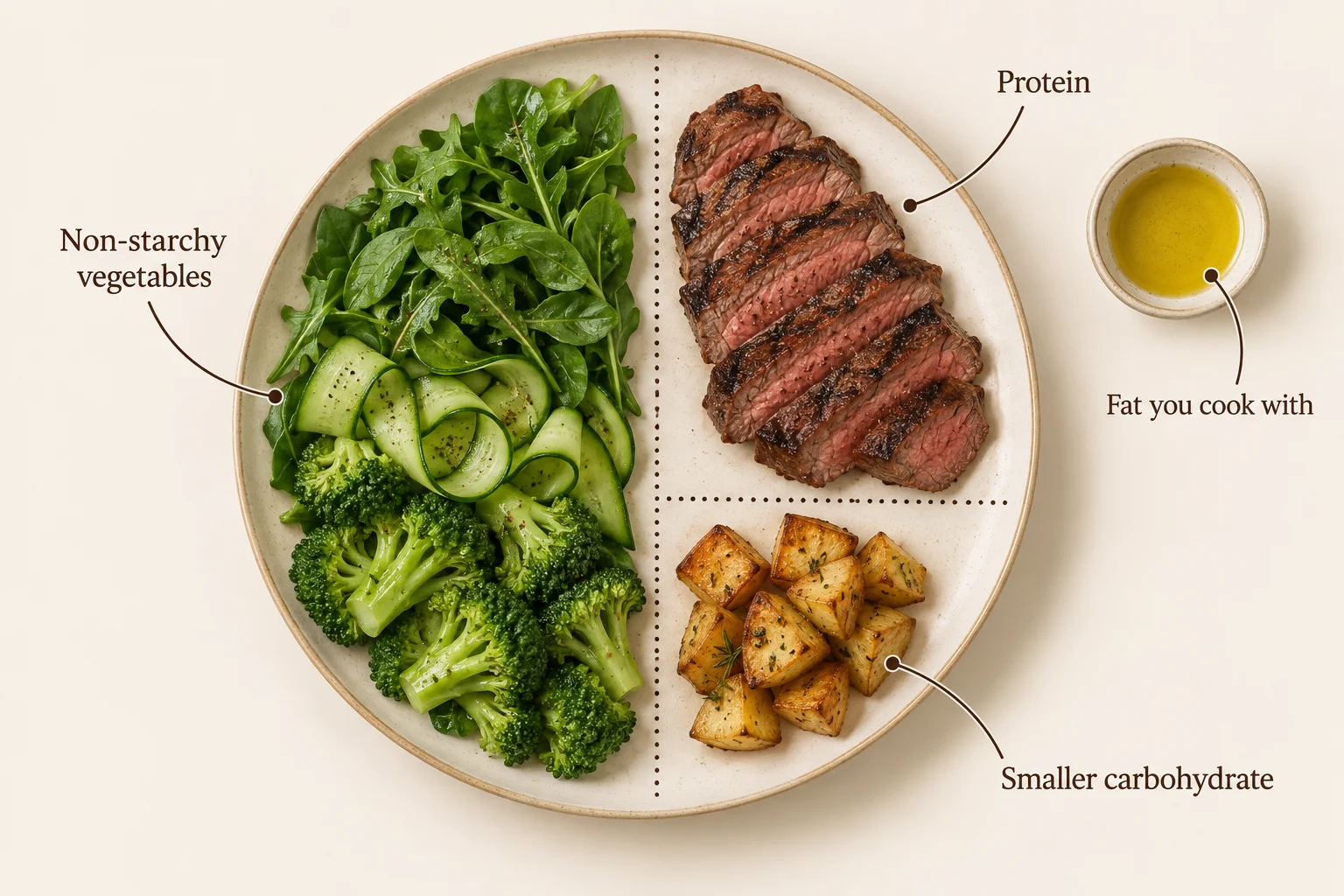
You don’t need a new plan for every meal. You need one shape you can repeat. Fewer variables beat more rules.
Build it around protein. Salmon, chicken, beef, eggs, tofu. Some people find a protein-forward meal holds them longer, which is worth testing on yourself. If you have kidney disease, the right amount of protein is individual. NIDDK advises that you work with a dietitian or health care professional to find it.
Fill the rest with non-starchy vegetables. Leafy greens, cucumber, zucchini, cabbage and broccoli add volume with little carbohydrate.
Cook with fat you like. Olive oil, avocado, butter, cheese. It adds flavor and makes the plate feel like a meal. This page doesn’t claim it flattens your glucose on its own.
Keep the carbohydrate smaller, and try eating it last. A 2026 systematic review of six small studies, 107 healthy adults with average ages of 20 to 37, found that most reported lower after-meal glucose when vegetables, fruit or protein came before the carbohydrate. The studies lasted days and looked at single meals. So treat it as a small trick to try, not a rule.
Five dinners built this way
These are recipes already on the site. Each card calculates net carbs per serving from USDA FoodData Central data, using total carbohydrate minus fiber. Brands and portions move the numbers, so treat them as close, not exact.
| Dinner | Net carbs | Servings |
|---|---|---|
| Grilled Salmon Salad with Avocado and Greens | 4.7 g | 2 |
| Creamy Low Carb Casserole With Chicken and Spinach | 6.6 g | 6 |
| One-Skillet Ground Beef and Cabbage Stir Fry | 7.2 g | 4 |
| Low-Carb Taco Bowl with Cauliflower Rice | 9.9 g | 4 |
| Low-Carb Beef Stuffed Peppers | 12.6 g | 4 |
The pattern is the same across all five: one protein, vegetables where they fit, and no rice, pasta or bread underneath. If a few of your dinners each week look like this, you have a rotation.
Breakfast, snacks and the rest of the day
The same shape works earlier in the day. Our guide to low-carb breakfasts for steadier blood sugar gives five to start with, and low-carb snacks covers the gap between meals.
If you’d rather sort foods than meals, start with foods that don’t spike blood sugar. If a specific reading has you worried, what causes blood sugar spikes explains what else besides food can move it. And for the wider picture on insulin resistance, see our insulin resistance diet guide.
Using it without turning it into a rulebook
Pick three meals you like and repeat them. That’s the whole method. When meals repeat, you can tell what’s actually working, because there’s less noise around it. Our low-carb meal planning guide and the 7-day meal plan lay out a week if you want one, and the grocery list covers the shopping.
You don’t need to weigh every gram. If tracking makes eating feel tense, set it aside. A plate built to this shape is close enough.
The order you eat in can matter too. Starting with the vegetables and protein and leaving the bread for last is one of the habits in how to lower blood sugar after eating, and three easy low-carb lunches are built the same way.
Questions about blood sugar friendly meals
What makes a meal blood sugar friendly?
Mostly how much carbohydrate it holds, according to the ADA’s consensus report. A protein at the center, non-starchy vegetables for volume and a smaller carbohydrate portion is a practical shape. How your own glucose responds still varies from person to person.
Is a blood sugar crash real?
Hunger a couple of hours after eating is real. In one large study of healthy adults, a bigger dip below baseline modestly predicted hunger and later eating. That isn’t the same as a medically low reading. Frequent or severe symptoms are worth raising with a clinician.
Does the order I eat food in matter?
In small, short studies of healthy adults, eating vegetables, fruit or protein before carbohydrate often lowered the after-meal glucose rise. The studies looked at single meals over a few days, so it’s a small experiment to try, not a proven long-term fix.
Is a blood sugar friendly meal the same as a keto meal?
No. The ADA report separates low-carbohydrate eating, 26 to 45 percent of calories, from very low-carbohydrate eating, under 26 percent. A meal can lean low-carb without being ketogenic. You don’t need to be in ketosis for these plates to work.
Do I need a glucose monitor to eat this way?
Nothing on this page depends on one. If you use one, take the readings to your clinician rather than reacting to a single number. Responses to the same meal vary widely between people, so one reading says little on its own.
Pick one meal to repeat this week
Choose one dinner from the table above and make it twice this week. Notice how you feel two or three hours later, and write down one line about it. That’s enough data to decide whether it’s worth keeping. When you’re ready for more, the recipes hub has the rest.
This article is general information, not medical advice. Low-carb eating can change how some medications work, particularly diabetes and blood pressure medication. Talk with your doctor or pharmacist before you make a significant change to how you eat, especially if you take prescribed medication or manage a health condition.