How to Lower Blood Sugar After Eating: 5 Steady Habits
You can’t control every number after a meal. You can change what’s on the plate, the order you eat it in, and what you do for the next half hour.

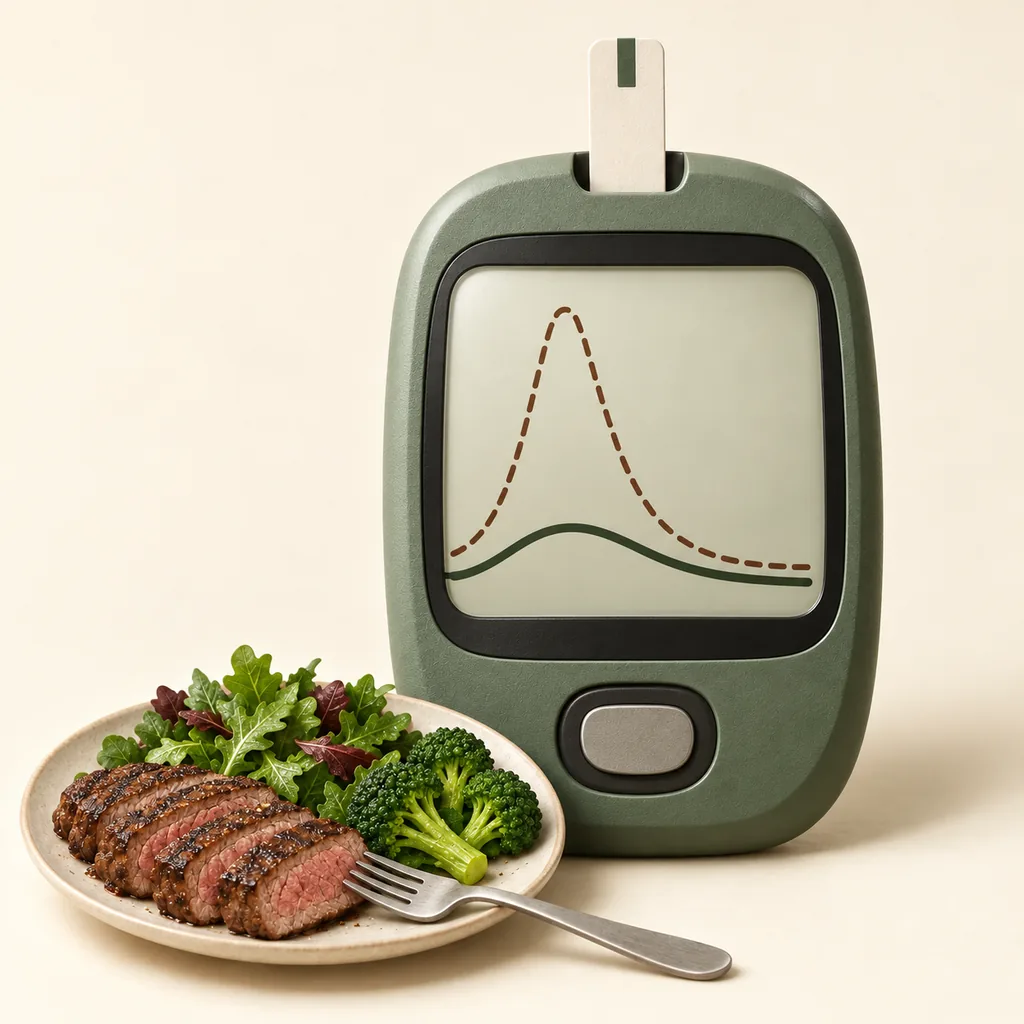
You eat lunch at your desk, and an hour later you’re foggy and reaching for something sweet. Or your meter shows a number after dinner that seems too high for what you ate. Most advice on how to lower blood sugar after eating jumps straight to a list of foods to cut. That’s usually the least useful place to start.
A rise after a meal is normal. Carbohydrate breaks down into glucose, and the reading goes up. What you can influence is how fast and how far it climbs. The CDC puts it simply: how fast carbs raise your blood sugar depends on what the food is and what you eat with it.
So this is about the meal as a whole. The plate, the order, the half hour afterward.
If you take insulin or another diabetes medicine, read this first
The habits below can bring post-meal readings down. If your medication dose was set against the way you eat now, that matters. NIDDK lists insulin, sulfonylureas and meglitinides among the causes of low blood glucose. It also names eating fewer carbohydrates than usual, and more activity than your usual routine.
Talk with the clinician who manages your medication before you cut carbohydrate or add walks after meals. Don’t change a dose yourself.
What a “spike” after a meal actually means
Blood sugar isn’t meant to stay flat. It rises after you eat and comes back down as insulin helps your cells take the glucose in. A rise on its own isn’t a diagnosis.
For people with diabetes, the American Diabetes Association gives a general target: less than 180 mg/dL one to two hours after the start of a meal, for most adults who aren’t pregnant. The ADA also says goals can be stricter or looser for each person. Your own target comes from your care team, not a chart online.
If you don’t have diabetes and don’t monitor, a sluggish afternoon doesn’t tell you what your glucose did. It might be the meal. It might be sleep, or a long morning of sitting. If you’re worried, ask your clinician about testing rather than guessing from how you feel. For the wider list of reasons readings rise, see what causes blood sugar spikes. If the high number shows up before breakfast rather than after a meal, read why blood sugar can be higher in the morning.
How to lower blood sugar after eating: 5 steady habits
1. Build the plate before you think about cutting anything
The biggest lever is what you eat. The CDC says plainly that eating carbs with foods that have protein, fat, or fiber slows down how quickly your blood sugar rises.
That’s why the same slice of bread behaves differently on its own than it does next to a steak and a salad.
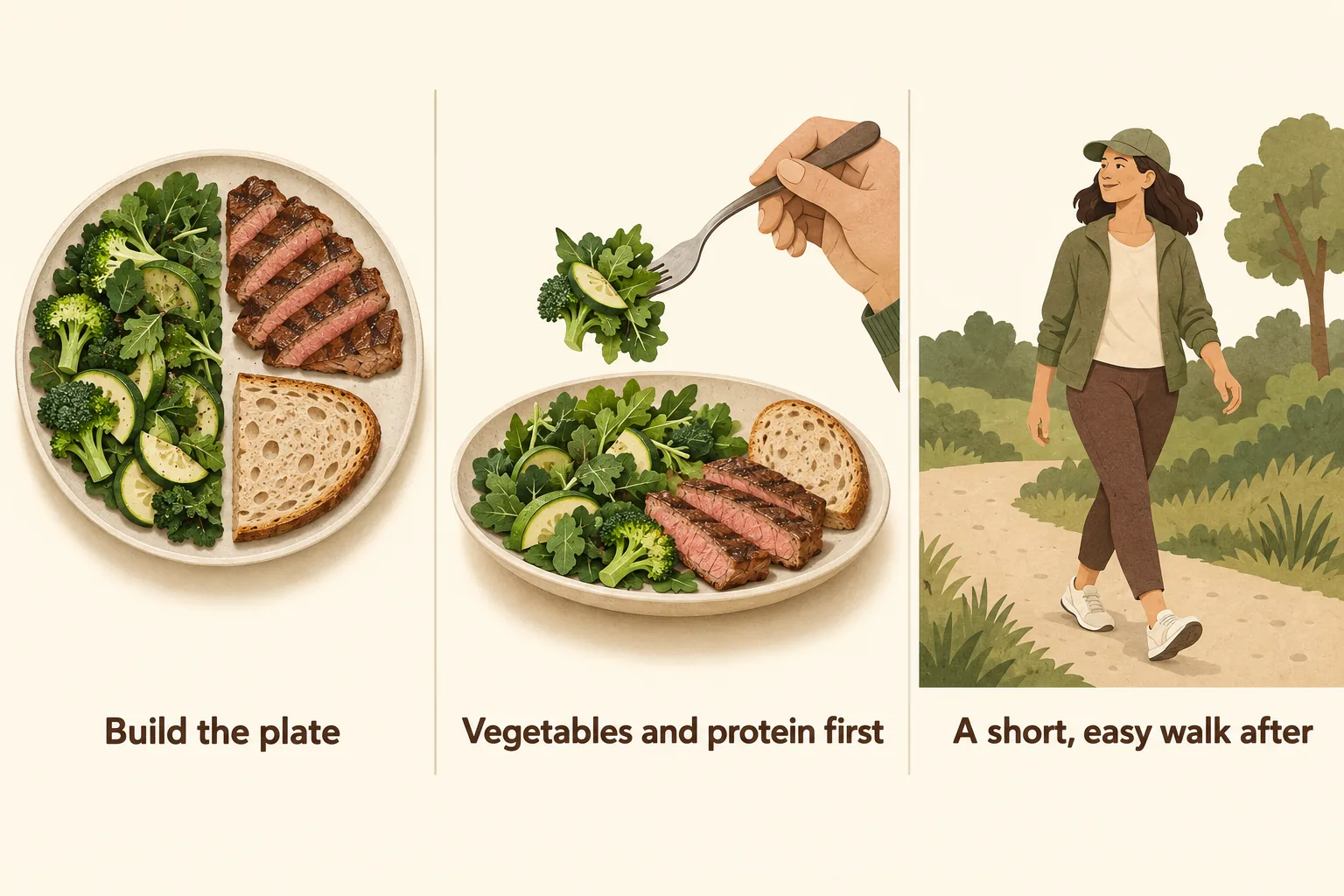
The CDC’s plate method is a practical way to build that in without counting anything:
- Half the plate nonstarchy vegetables, such as salad, green beans or broccoli
- A quarter lean protein, such as chicken, eggs, tofu or beans
- A quarter carbohydrate foods
On a low-carb plate, that last quarter often gets smaller or turns into more vegetables. You don’t have to empty it to see a difference. Shrinking it and keeping the protein and vegetables generous is a pattern many people find easier to repeat than cutting a food group outright.
For lunches built this way, see three easy low-carb lunches. For dinners, blood sugar friendly meals, and for a wider food list, foods that don’t spike blood sugar.
2. Eat the vegetables and protein first
This one costs nothing, and it doesn’t change what you eat.
In a small 2015 study in Diabetes Care, 11 adults with type 2 diabetes ate the same meal twice: chicken, salad, broccoli, ciabatta and orange juice. One day they ate the bread and juice first and the chicken and vegetables 15 minutes later. On the other day, the order was reversed.
When vegetables and protein came first, average glucose was lower:
- about 29% lower at 30 minutes
- about 37% lower at 60 minutes
- about 17% lower at 2 hours
It’s a pilot study. The group was small, everyone was on metformin, and the researchers only followed the readings for two hours. It doesn’t prove the same result for everyone. But it’s a low-risk thing to try. Start the meal with the salad or the vegetables and the protein, and leave the bread or potatoes for the last few bites.
3. Take a short, easy walk after you eat
Sitting still after a meal is the default for most of us. Lunch at a desk, dinner on the couch.
A 2022 review in Sports Medicine pooled seven one-day trials that compared long stretches of sitting with short breaks of standing or light walking. Light walking breaks lowered glucose after meals compared with staying seated. Standing breaks helped a little. Walking helped more.
These were short lab studies, mostly in adults carrying extra weight. They don’t tell you the exact number of minutes that works for you. But “light” is the important word. This is a slow walk around the block or the office, not a workout.
If you take insulin or a sulfonylurea, check with your care team first. NIDDK notes that more activity than your usual routine can lower blood glucose, and that’s the direction you need to be careful with.
4. Don’t skip breakfast to save carbs for later
What happens after lunch is partly decided before it. The CDC lists skipping breakfast as something that can raise blood sugar after both lunch and dinner.
A protein-first breakfast like this low-carb turkey breakfast bowl is one way to start.
5. Repeat the meals that work, and notice your sleep
If you monitor, you learn more from eating the same lunch three times and comparing than from a different lunch every day. Fewer variables, clearer patterns.
Sleep belongs in that comparison. The same CDC page says even one night of too little sleep can make your body use insulin less efficiently. A familiar meal after a bad night may read higher. That’s sleep, not the food.
When a high reading after eating needs more than a food change
Food habits are for ordinary rises. They aren’t the answer to every high number.
Talk to your care team if your readings keep landing above the target they’ve given you, or if you notice new thirst, frequent urination, blurred vision or tiredness. If you have diabetes and feel very unwell, follow your care plan and don’t wait to finish a food diary. The warning signs that need emergency care are listed in what causes blood sugar spikes.
If you’re wondering whether a pattern like this points to insulin resistance or prediabetes, only a blood test can tell you. Our insulin resistance diet guide explains how eating patterns fit in.
Questions about blood sugar after meals
How long after eating should blood sugar come down?
The ADA’s general target for most adults with diabetes is under 180 mg/dL one to two hours after the start of a meal. Your clinician may give you a different target. If you monitor, check at the same time after each meal so your readings compare like with like.
Does eating vegetables first really make a difference?
In one small study of adults with type 2 diabetes, eating vegetables and protein before carbohydrate led to lower glucose over the next two hours than the reverse order. It’s an early finding, not a guarantee. It costs nothing to try and doesn’t change what’s on your plate.
Is it better to walk right after eating?
Short, light walks after meals lowered post-meal glucose compared with sitting in a 2022 review of seven trials. You don’t need a long or hard walk. If you take insulin or a sulfonylurea, ask your care team first, because extra activity can push glucose lower than expected.
Should I cut out carbs completely to stop spikes?
No. A smaller portion of carbohydrate, eaten with protein, fat and fiber, slows the rise for many people. If you take diabetes medication, cutting carbs sharply can cause low blood glucose, so talk with your clinician before making a big change.
Pick one meal and change one thing
Don’t rebuild every meal this week. Pick the one you eat most often, lunch for most people, and change one thing about it. Eat the protein and vegetables first. Or shrink the bread and add a side salad. Or walk for a few minutes when you finish.
If you monitor, keep the rest of that meal the same and compare. You’ll learn more from one clear change than from five at once.
If lunch is the meal you pick, these three are already built this way: protein and vegetables first, the carbohydrate kept small. Keep the carb count cheat sheet nearby while you shop, and if you want the whole plan on paper, the Leave the Carbs planner is there for that.
See the three easy lunches →Get the free carb count cheat sheet
This article is general information, not medical advice. Low-carb eating can change how some medications work, particularly diabetes medication. Talk to your doctor or pharmacist before making a significant change to how you eat, especially if you take prescribed medication or manage a health condition.