Lunch is where the afternoon slump starts.
A sandwich or a wrap puts most of the meal’s carbohydrate in the bread, and there isn’t much protein to slow it down.
These three easy low-carb lunches flip that. Each one starts with a real serving of protein, adds vegetables and some fat, and keeps the carbohydrate small. The CDC notes that eating carbs with protein, fat or fiber slows how quickly blood sugar rises. How your own body responds will still vary.
All three make two servings, so you can eat one today and pack one for tomorrow.
| Lunch | Net carbs | Protein | Calories | Time |
|---|---|---|---|---|
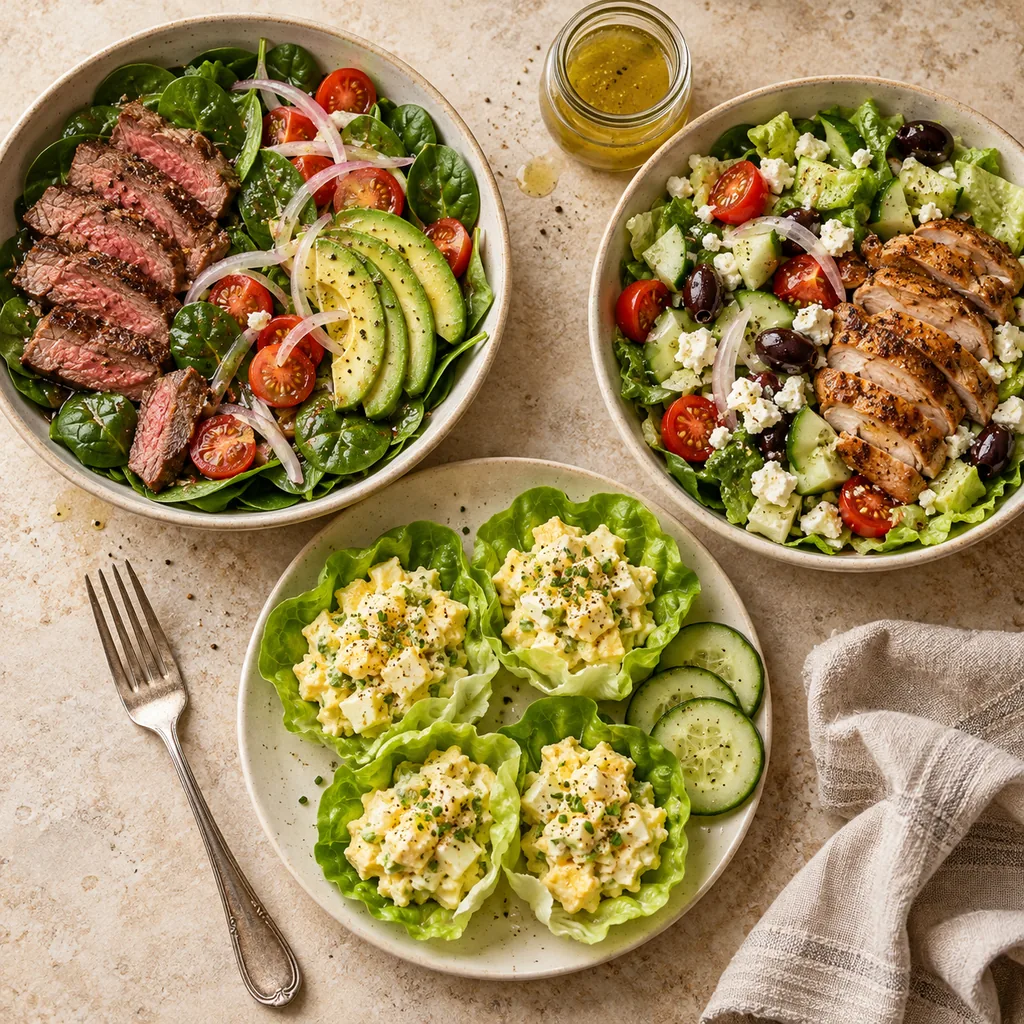
| Steak, Avocado and Spinach Salad | 5.5g | 37g | 442 | 10 min |
| Egg Salad Lettuce Wraps | 4g | 20g | 388 | 22 min |
| Greek Chicken Thigh Bowl | 8.5g | 39g | 455 | 25 min |
All figures per serving, half the recipe.
Why these three?
Each one fits a different kind of weekday, so there’s always one that works.
- The steak salad is for leftovers. Cook an extra steak at dinner and lunch takes ten minutes the next day.
- The egg salad wraps are for days with no time to cook. Boil the eggs ahead and there’s nothing to heat at lunch.
- The chicken bowl is for cooking once. Thighs reheat without drying out, so one batch on Sunday covers two lunches.
They share the same build. A real serving of protein comes first: steak, eggs or chicken, with 20g to 39g a serving. The carbohydrate comes from vegetables, not bread, which keeps every lunch between 4g and 8.5g net carbs. All three use ingredients from an ordinary grocery store, and all three pack well with the dressing kept separate.
1. Steak, Avocado and Spinach Salad
The most filling of the three, and the easiest if you have steak left over from dinner. The avocado is where most of the fat comes from, and most of its carbohydrate is fiber.
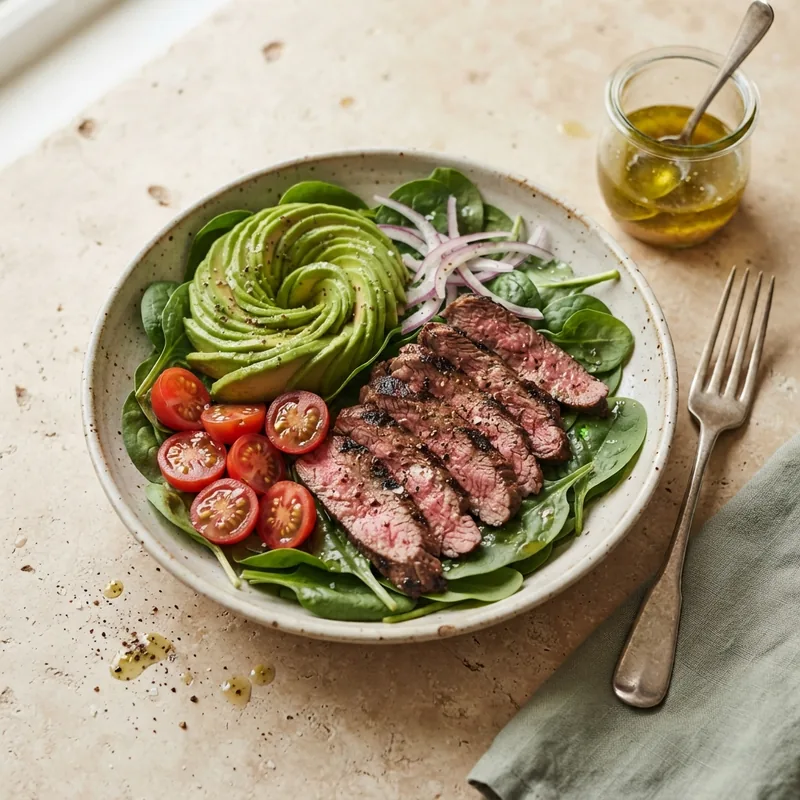
With steak that is already cooked. If you cook it fresh, add about 15 minutes.
Ingredients
- 225g cooked top sirloin steak (8 oz), sliced thin, weighed after cooking
- 90g baby spinach (3 packed cups)
- 1medium avocado (about 140 g flesh), sliced
- 150g cherry tomatoes (1 cup), halved
- 30g red onion, sliced thin
- 1½tbsp extra-virgin olive oil (20 g)
- 1tbsp lemon juice (15 g)
- Salt and black pepper to taste, not included in the nutrition
Instructions
- 1
Whisk the olive oil, lemon juice and a pinch of salt and pepper in a small bowl.
- 2
Divide the spinach between the plates or containers.
- 3
Add the tomatoes and red onion.
- 4
Lay the steak on top.
- 5
Add the avocado just before eating, so it doesn’t brown.
- 6
Pour over the dressing and serve.
Nutrition per serving
One serving is half the recipe. Scaling changes the batch, not the serving, so these figures stay the same. Total carbohydrate 12.4g minus fiber 6.9g. Also 3.4g sugar, 114mg sodium, with no salt added.
Cooking the steak fresh? Season it, sear it in a hot pan for 3 to 5 minutes a side for a steak about 1 inch thick, then rest it for a few minutes before slicing. Weigh it after cooking, because the nutrition is worked out on the cooked weight.
2. Egg Salad Lettuce Wraps
No cooking on the day if the eggs are boiled ahead. This is the lightest of the three on carbs, and three eggs a serving keeps it from feeling like a snack.

The cook time is for boiling the eggs.
Ingredients
- 6large eggs (about 300 g), hard-boiled and peeled
- 3tbsp regular mayonnaise (41 g)
- 1tsp yellow mustard (5 g)
- 1celery stalk (40 g), finely diced
- 8butter lettuce leaves (about 60 g)
- 100g cucumber, sliced, on the side
- Salt, black pepper and a pinch of paprika to taste, not included in the nutrition
Instructions
- 1
Chop the eggs roughly and put them in a bowl.
- 2
Add the mayonnaise, mustard and celery.
- 3
Mash with a fork until it’s as smooth or chunky as you like.
- 4
Season with salt, pepper and paprika.
- 5
Spoon the egg salad into the lettuce leaves, four leaves a serving.
- 6
Serve with the cucumber slices.
Nutrition per serving
One serving is half the recipe. Scaling changes the batch, not the serving, so these figures stay the same. Total carbohydrate 5g minus fiber 1g. Also 3.2g sugar, 362mg sodium, with no salt added.
To boil the eggs: cover them with cold water, bring to a boil, then turn off the heat, cover and leave for 12 minutes. Move them to cold water before peeling.
3. Greek Chicken Thigh Bowl
Thighs stay juicy when you reheat them, which makes this the best one to cook on Sunday and pack for the week. Feta and olives bring most of the salt, so taste before adding more.
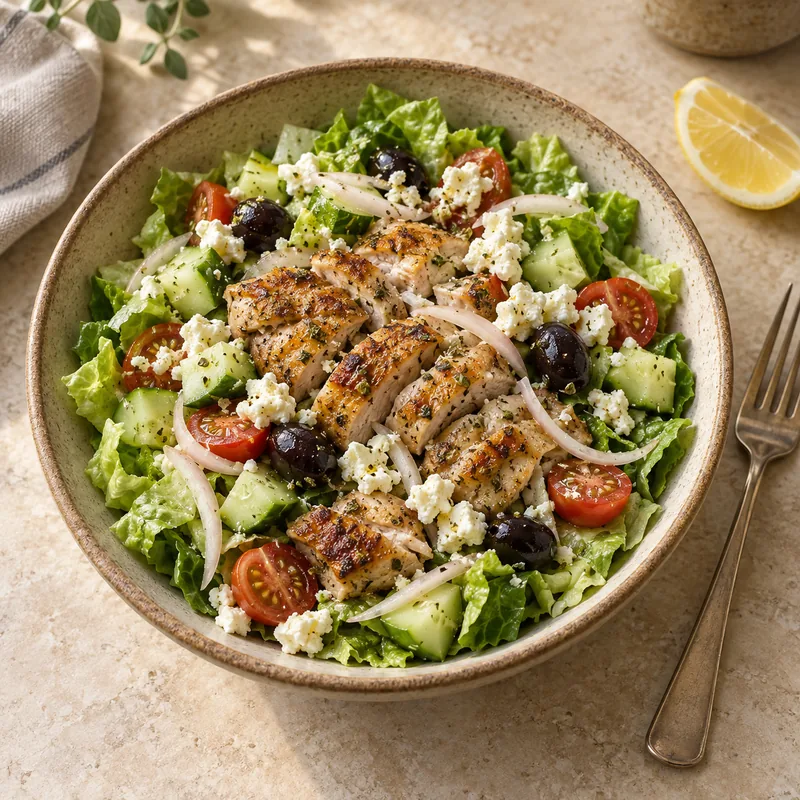
Ingredients
- 340g boneless, skinless chicken thighs (12 oz), raw weight
- 2tbsp extra-virgin olive oil (27 g), divided
- ½tsp dried oregano, not included in the nutrition
- 100g chopped romaine lettuce (2 cups)
- 150g cucumber, diced
- 150g cherry tomatoes (1 cup), halved
- 40g pitted black olives (about 10 olives)
- 50g crumbled feta (⅓ cup)
- 30g red onion, sliced thin
- 1tbsp lemon juice (15 g)
- Black pepper to taste
Instructions
- 1
Rub the chicken with half the olive oil, the oregano and black pepper.
- 2
Cook it in a skillet over medium-high heat for 5 to 7 minutes a side, until a food thermometer reads 165°F (74°C).
- 3
Rest the chicken for 5 minutes, then slice it.
- 4
Divide the romaine between the bowls.
- 5
Add the cucumber, tomatoes, olives and red onion.
- 6
Top with the chicken and the feta.
- 7
Whisk the rest of the olive oil with the lemon juice and pour it over.
Nutrition per serving
One serving is half the recipe. Scaling changes the batch, not the serving, so these figures stay the same. Total carbohydrate 11.4g minus fiber 2.9g. Also 4.6g sugar, 604mg sodium, with no salt added.
Most of the sodium in this bowl is the feta and olives.
How the numbers were worked out
Net carbs here means total carbohydrate minus fiber. None of these recipes has sugar alcohols, so nothing else is subtracted. It’s a practical way of counting, not a label term, and it won’t predict exactly how your own blood sugar responds.
Every figure was calculated per ingredient from USDA FoodData Central, at the weights listed. Salt, pepper, herbs and spices are left out.
Nutrition is calculated from ingredient data and will vary with brands, sizes and how much of the dressing ends up on the plate. Treat it as close, not exact.
Swaps
Steak salad. Ground beef or leftover roast beef work the same way. Chicken thigh instead of steak keeps the carbs the same. Leave out the onion to drop about 1.2g net carbs a serving.
Egg salad. Greek yogurt in place of half the mayonnaise lowers the fat and adds a little carbohydrate, so the card no longer applies. Romaine leaves hold up better than butter lettuce if you’re packing it.
Chicken bowl. No feta makes it dairy-free and takes out about 1g net carbs. Skip the olives to cut the sodium. Steak works here too.
Packing and storing
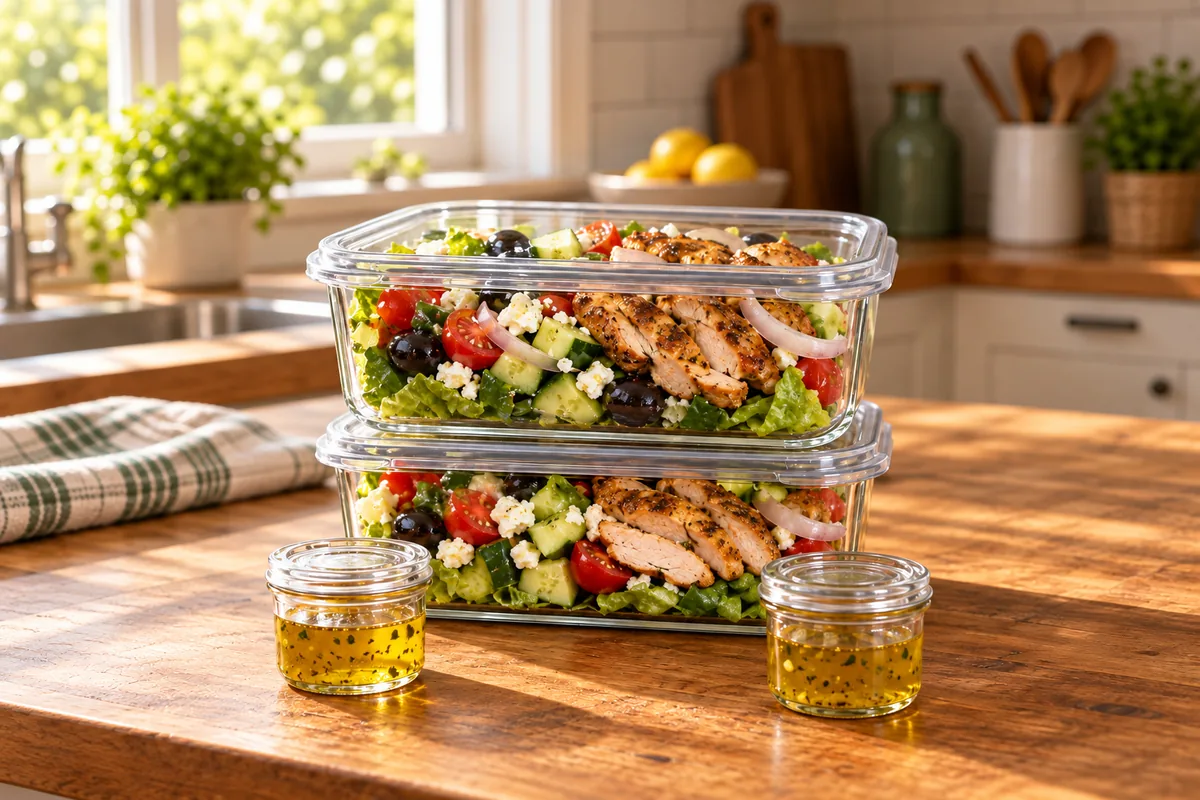
- Keep the dressing separate until you eat, so the greens don’t wilt.
- Add avocado on the day.
- Cooked steak, cooked chicken and the egg salad keep in a covered container in the fridge for 3 to 4 days, in line with USDA leftovers guidance.
- Eat the chicken cold or reheat it until steaming hot, to 165°F.
If you take insulin or another medicine that lowers blood sugar
Swapping a sandwich lunch for one of these cuts the meal’s carbohydrate a lot. NIDDK lists insulin and sulfonylureas among the causes of low blood glucose, and not eating enough carbohydrate as one trigger. Talk with the doctor who manages your medication before you make the switch, and don’t adjust doses yourself.
Common questions
What is a good low-carb lunch to take to work?
Any of these three. Pack the dressing and the avocado separately, and the chicken bowl or steak salad will hold until lunchtime. The egg salad travels best with the lettuce leaves packed on the side.
Will these keep me full until dinner?
They’re built to. Each one has 20g to 39g of protein plus fat from olive oil, avocado or eggs. Hunger varies from person to person, though. If you’re hungry by 3pm, add more of the protein before you add bread.
Can I make all three on Sunday?
Yes. Cook the chicken and steak and boil the eggs on Sunday. Mix the egg salad, chop the vegetables and keep the dressings in small jars. Everything except the avocado is ready by Monday, and it all keeps 3 to 4 days.
Pick one for tomorrow.
Choose the lunch you’d actually look forward to and make it twice this week. Keep the carb count cheat sheet nearby while you shop. If you want the whole plan on paper, the Leave the Carbs planner is there for that.
Get the free carb count cheat sheet →Work out your own numbers
Why the order you eat in matters
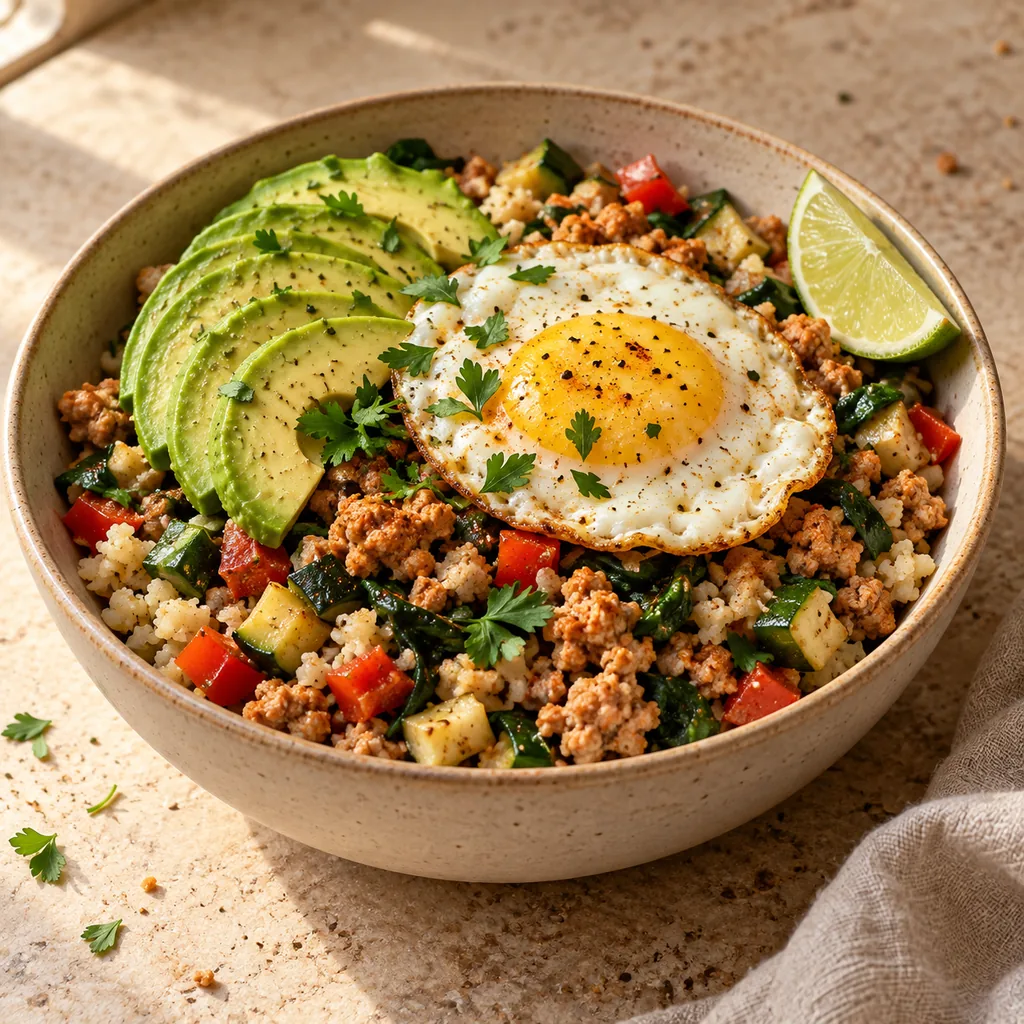
The protein-and-vegetables-first idea behind these lunches is explained in how to lower blood sugar after eating. For breakfast in the same pattern, try the low-carb turkey breakfast bowl. For dinner, see blood sugar friendly meals.
General information, not medical advice. If you take medication for diabetes or blood pressure, talk to your doctor before making a big change to how you eat.

Real food. Fewer complications.
I share practical low-carb meals and clear guidance for people who want more stability without turning food into another full-time job.
Read my story →