Foods That Don't Spike Blood Sugar: What to Eat
Everyday food choices, simple meal ideas, and the portion details that help you make sense of the list.

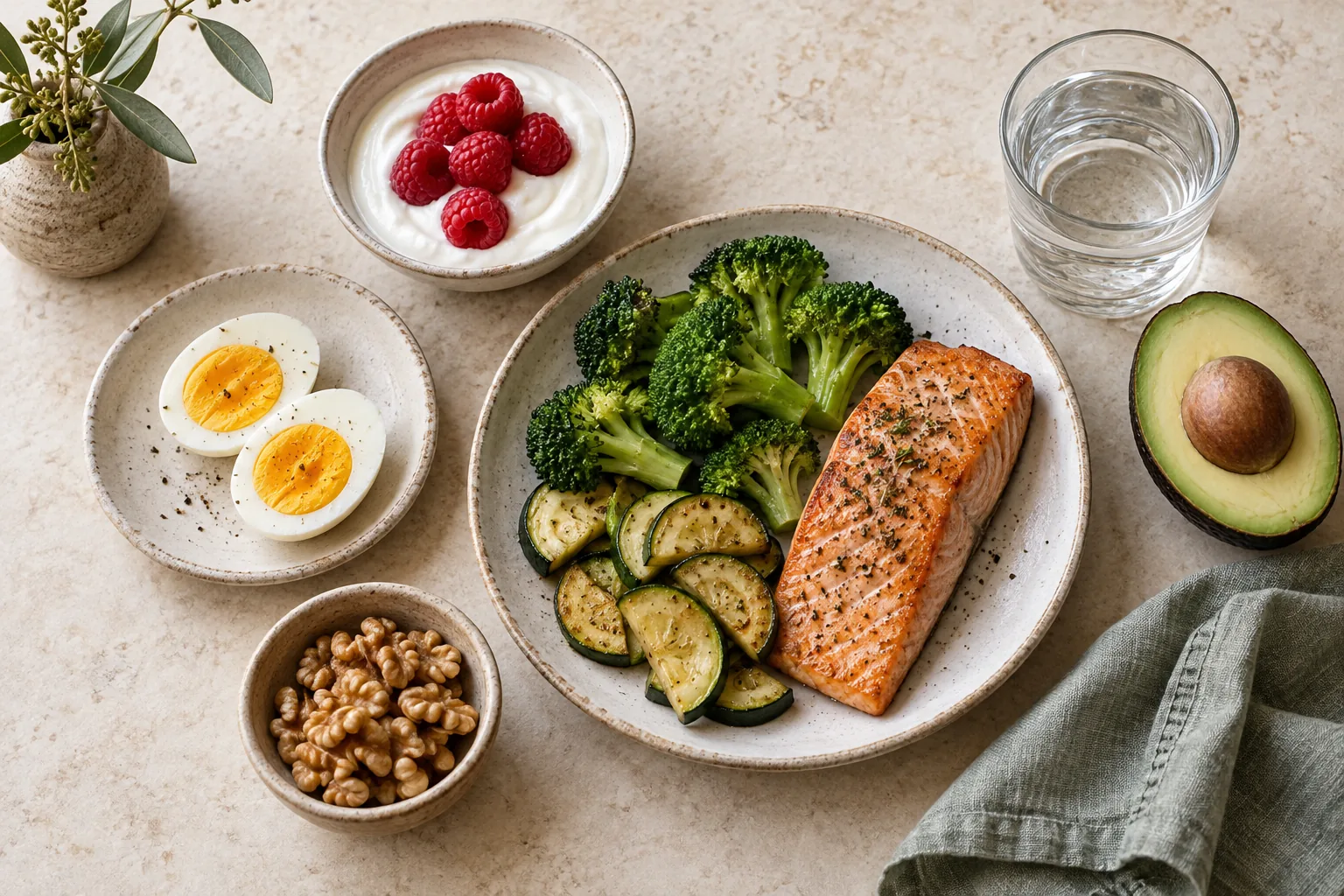
Finding foods that don’t spike blood sugar should make your next meal easier to choose. Plain eggs, fish, chicken, tofu, leafy greens, broccoli, nuts, and avocado are useful starting points. Below, you’ll find practical ways to use them, plus the portion details that matter for fruit, yogurt, and beans.
The phrase needs one qualification: no food list can promise a flat glucose reading for everyone. A rise after eating is expected. The amount you eat, how the food is prepared, and your individual response all matter.
This guide focuses on everyday food choices. For the broader picture of how eating patterns fit together, see our insulin resistance diet guide.
Before you cut carbohydrate, if you take diabetes medication
If you use insulin or a sulfonylurea, this matters before you change anything. NIDDK names insulin, medicines that make the pancreas release more insulin, and not eating enough carbohydrate among the causes of low blood glucose. Your dose was set against the way you eat now. Talk with the clinician who manages your medication before you reduce carbohydrate substantially, and ask what they want you to monitor while you change it. Do not change doses on your own.
If you are treating a low blood sugar, follow the fast-acting carbohydrate treatment you have been given. Low-carb snacks are not a substitute for it.
Foods that don’t spike blood sugar: the useful starting list
Foods with little carbohydrate usually have less immediate effect on blood glucose than foods built around starch or sugar. That makes them useful ingredients, without making them unlimited or suitable for every medical situation.
The CDC’s meal-planning guidance explains that carbohydrates raise blood glucose and that eating them with protein, fat, or fiber can slow the rise. Pairing foods changes the meal’s response; it does not cancel its carbohydrate.
Plain eggs, fish, poultry, and tofu
Keep a few protein options that work with the time you actually have:
- Eggs for a quick scramble or a batch of boiled eggs.
- Canned tuna or salmon for a lunch that needs no cooking.
- Chicken or turkey leftovers for salads and lettuce wraps.
- Plain tofu for a skillet with vegetables.
Preparation matters. Battered fish, breaded chicken, and sweet glazes bring carbohydrate that the plain food does not. You can still choose those foods, but they belong in a different comparison.
Think “what can I build lunch around?” rather than “what is the perfect protein?” Two dependable options in the refrigerator are more useful than a long list you never shop from.
Non-starchy vegetables
Broccoli, cauliflower, zucchini, cabbage, spinach, mushrooms, cucumber, and bell peppers can make up a substantial part of a meal without a large carbohydrate load. The American Diabetes Association includes these kinds of vegetables in its Diabetes Plate guidance.
Use whichever form is practical: frozen broccoli, bagged salad, leftover roasted zucchini, or cabbage sliced into a skillet. Check sauces on prepared versions.
Potatoes, corn, and peas are different. They can fit, but they count as starchy carbohydrate foods rather than interchangeable replacements for leafy greens.
Nuts, seeds, avocado, and olive oil
These add texture and variety without making bread or crackers the center of every snack. Try walnuts over yogurt, avocado beside eggs, or olive oil on roasted vegetables.
Choose plain nuts rather than honey-roasted or candy-coated versions. Put a portion in a bowl instead of letting the bag decide how much you eat.
There is also more to a useful food choice than its immediate glucose effect. NIDDK’s healthy eating guidance for diabetes recommends nutrient-rich foods and limiting foods high in saturated fat. Adding butter to everything is not a necessary part of eating fewer carbs.
Plain yogurt and cottage cheese
Plain Greek yogurt and cottage cheese are convenient options, but they are not carbohydrate-free. Dairy contains naturally occurring sugar, and the amount varies by product and serving.
Compare the container you buy, including the serving size. A plain yogurt with a few berries is a different meal from a sweetened yogurt topped with granola, honey, and dried fruit.
Keep the topping you enjoy most and portion it deliberately. You do not have to turn breakfast into an ingredient audit every morning.
Fruit, beans, and whole grains need a different label
These foods are often included in “no-spike” lists. A more accurate description is carbohydrate foods that can offer fiber and useful nutrients. They can still raise blood glucose.
The CDC’s guidance on choosing carbohydrate foods emphasizes both quality and portion size. That gives you room to include foods you like without pretending their carbohydrate disappears.
Fruit: Try a modest serving of whole berries, an apple, or an orange. Whole fruit is generally a more useful everyday choice than juice because it retains fiber. Berries are an option, not the only fruit you are allowed to eat.
Beans and lentils: Use a small serving in a salad or soup alongside vegetables and protein. They contribute carbohydrate as well as fiber and protein. A bowl containing beans, rice, and tortillas has several carbohydrate sources to account for.
Oats and other whole grains: Start with a portion that fits your eating plan. “Whole grain” describes the food; it does not guarantee your response to a large bowl. Toppings and drinks count too.
A practical example is plain yogurt with a small handful of berries and walnuts. Another is a chicken salad with a spoonful of lentils. These are combinations to try, not tested promises about your glucose reading.
Turn the food list into breakfast, lunch, dinner, and snacks
You do not need a completely different menu. It is often easier to keep a familiar meal and change the part that dominates it.
The Diabetes Plate offers a starting structure: half the plate non-starchy vegetables, one-quarter protein, and one-quarter carbohydrate foods. Your clinician or dietitian may recommend different proportions for your needs. To see how those pieces fit together, read blood sugar friendly meals.
Breakfast
Try scrambled eggs with spinach and mushrooms, or plain Greek yogurt with walnuts and a modest serving of berries.
If toast is the part you enjoy, keep a portion alongside the eggs. That lets you change the balance without replacing breakfast with something you do not want to eat.
Lunch
Use leftover chicken or tofu, bagged greens, cucumber, and an olive oil dressing. Add a portion of beans or another carbohydrate food if it fits your plan.
For a sandwich lunch, look at the whole meal. Bread, chips, a sweet drink, and dessert add up. Choosing water and a vegetable side is a straightforward place to start.
Dinner
Pair fish, chicken, or tofu with roasted or stir-fried vegetables. Serve rice, potatoes, or another starch in a deliberate portion instead of building the whole plate around it.
Our sheet pan salmon with roasted zucchini gives you a concrete dinner option. Choose sides according to your own eating plan.
Snacks
Keep one or two options ready for when you need them:
- A boiled egg with cucumber slices.
- Plain yogurt with a few berries.
- Celery with unsweetened peanut butter.
- A small portion of nuts with a piece of cheese.
For more variety, browse our low-carb snack ideas. Snack timing and size should fit your appetite and, if relevant, your diabetes care plan.
Check the extras before ruling out the food
Sometimes the useful change is in the sauce, coating, or drink.
Before replacing a whole meal, check:
- The actual serving: Is the label for the whole container or only part of it?
- Total carbohydrate: Do not stop at the sugar line.
- The coating or sauce: Breading, sweet chili sauce, and barbecue glaze change the dish.
- The drink: Water or unsweetened tea avoids the added sugar in sweetened drinks.
The ADA’s total carbohydrate guidance explains why “sugar-free” and “no added sugar” do not mean carbohydrate-free. It also cautions that advertised net-carb calculations do not precisely predict glucose effects.
This matters with snack bars, crackers, and packaged “keto” foods. Use the Nutrition Facts panel to compare products rather than assuming the front label settles the question.
Find the portions that work for you
A meal that works well for someone else may affect you differently. If you already monitor glucose, follow your care team’s advice about when to check and which targets apply to you.
Record the meal, portion, and relevant readings. Comparing a familiar meal on more than one occasion can be more useful than banning an ingredient after a single result. The ADA describes how tracking food and glucose can help you and your care team understand your individual response to meals.
Hunger, tiredness, and cravings can tell you how a meal feels. They cannot confirm a glucose spike or diagnose insulin resistance. Sleep, stress, illness, and a change in activity can move a reading too, and our guide to what causes blood sugar spikes walks through seven common triggers.
If you take diabetes medication, the note at the top of this guide applies before you make a substantial change.
Questions about food and blood sugar
Do eggs raise blood sugar?
Plain eggs contain very little carbohydrate, so they usually have a small immediate glucose effect. Look at the whole breakfast, including toast, potatoes, juice, and sauces. A low-carb ingredient does not guarantee a flat reading, and it does not replace your usual monitoring or medication plan.
Is cheese a good choice?
Cheese can fit as a small part of a snack or meal. Many varieties are low in carbohydrate, but saturated fat, sodium, and portion size still matter. Pair it with cucumber or a few nuts for variety rather than treating it as the main answer to every meal.
Can I eat oatmeal?
Yes, if it fits your eating plan and response. Oatmeal supplies carbohydrate, so portion size matters even when it is unsweetened. Consider what else goes into the bowl. A modest portion with nuts is different from a large serving with brown sugar, dried fruit, and a sweet drink.
Are sugar-free snacks automatically better?
No. They may still contain starch, other carbohydrates, or substantial calories. Compare serving size and total carbohydrate with the regular version. You may prefer the sugar-free product, but the label alone cannot tell you how it will affect your glucose or whether you will find it satisfying.
Is low glycemic index the same as low carb?
No. Glycemic index compares the blood glucose response to a set amount of carbohydrate in a food. It does not describe how much carbohydrate is in your serving. MedlinePlus explains why portion size and food combinations still matter when using GI.
What food lowers blood sugar quickly if it is already high?
No food on this list should be used as a quick treatment for high blood sugar. Follow the plan your diabetes care team has given you for high readings. If readings remain above your agreed range, or you feel unwell, contact your clinician rather than trying to correct them with food.
Make your next meal easier to repeat
Choose one meal you eat often. Pick a protein you like, add vegetables you will actually use, and decide on the carbohydrate portion. Buy enough to make that meal again.
Use our Low-Carb Meal Planning guide to turn those choices into a short, workable routine. A few dependable meals give you a practical place to start and fewer decisions to make tomorrow.