Low-Carb Snacks: 30 Easy Ideas That Keep It Simple
A useful snack fits how you already eat, takes the edge off real hunger, and doesn't turn into another project.

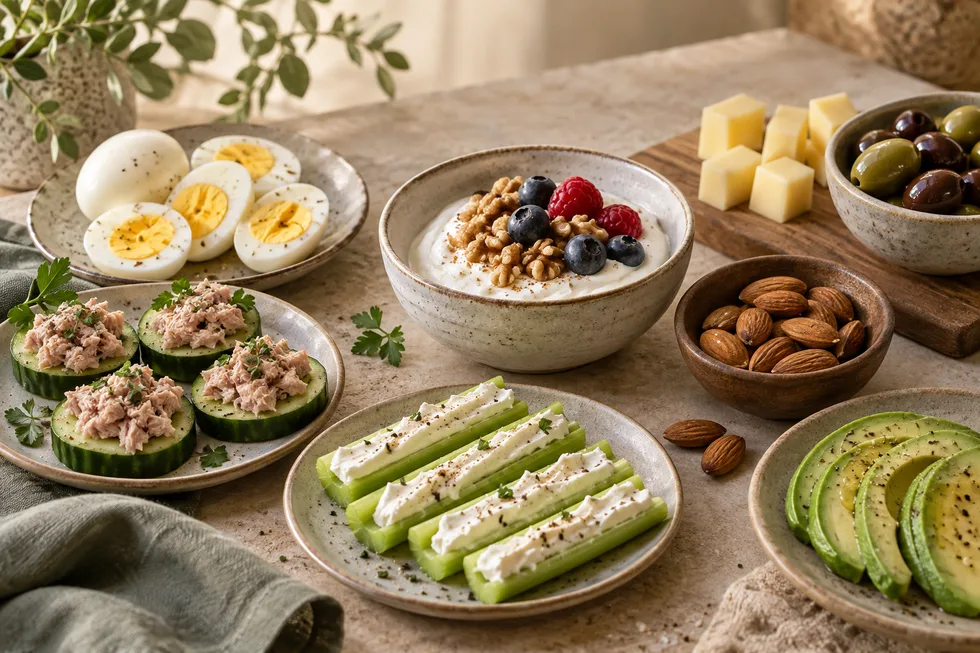
Low-carb snacks get strangely complicated.
You wanted something quick between lunch and dinner. Ten minutes later you're subtracting sugar alcohols on the back of a protein bar, wondering whether carrots count, and half deciding to just wait for dinner.
It doesn't have to run like that. A snack that works is one that fits how you're already eating, takes the edge off real hunger, and doesn't turn into another project.
Most of the time, ordinary food does this better than anything sold as keto. Eggs, Greek yogurt, cheese, tuna, cucumber, leftover chicken, a few berries.
What actually helps is having three or four options on hand that you don't have to think about.
Do You Actually Need a Snack?
Not always. Some people run fine on two or three solid meals and never give it a thought.
Others get hungry between meals because of shift work, smaller meals, training, medication timing, or the fact that dinner is still four hours away. There's no prize for skipping snacks, and no rule saying you have to eat every few hours.
The more useful question is whether you're hungry, or whether you've just arrived at the point in the day where you usually eat something. If it's real hunger, eat something that holds. If it isn't, you already have your answer.
That one distinction removes a surprising amount of food noise.
What Makes a Good Low-Carb Snack?
Start With Protein
Protein-heavy snacks tend to hold better than anything built on refined starch or sugar. How long a snack holds you varies from person to person, so this is worth testing on yourself rather than taking on faith.
The easy options:
- eggs
- Greek yogurt
- cottage cheese
- tuna
- chicken
- turkey
- cheese
- smoked salmon
- dry beef jerky (check the label for added sugar)
Picking snacks with blood sugar in mind? Here is what to check before you eat, with USDA numbers for ten familiar snacks.
You don't need to turn every snack into a protein target. It's just the first thing worth changing when your usual snack leaves you hunting for something else twenty minutes later.
If blood sugar is your main concern, our guide to foods that don't spike blood sugar explains how preparation and the rest of the meal change the picture.
Add Plants Where They Fit
Cucumber, celery, peppers, berries, avocado, nuts and seeds bring texture, fiber and something to actually taste.
Fiber matters for digestion, but it isn't a reliable appetite switch. A 2019 systematic review and meta-analysis of soluble fiber supplements found that across 24 trials measuring how much people went on to eat, only four showed a significant reduction.
The National Institute of Diabetes and Digestive and Kidney Diseases puts adult fiber needs at 22 to 34 grams a day depending on age and sex, and says to add it a little at a time so your body adjusts.
Add Enough Flavor To Make It Worth Eating
Olive oil, avocado, cheese, nuts, seeds, pesto, herbs, cream cheese, a simple dip. Any of them turn a plain ingredient into something you'd choose on purpose.
Low-carb gets hard when every snack feels like a penalty. Cucumber on its own probably won't hold your interest. Cucumber with tuna, feta or guacamole is a different proposition.
30 Easy Low-Carb Snack Ideas
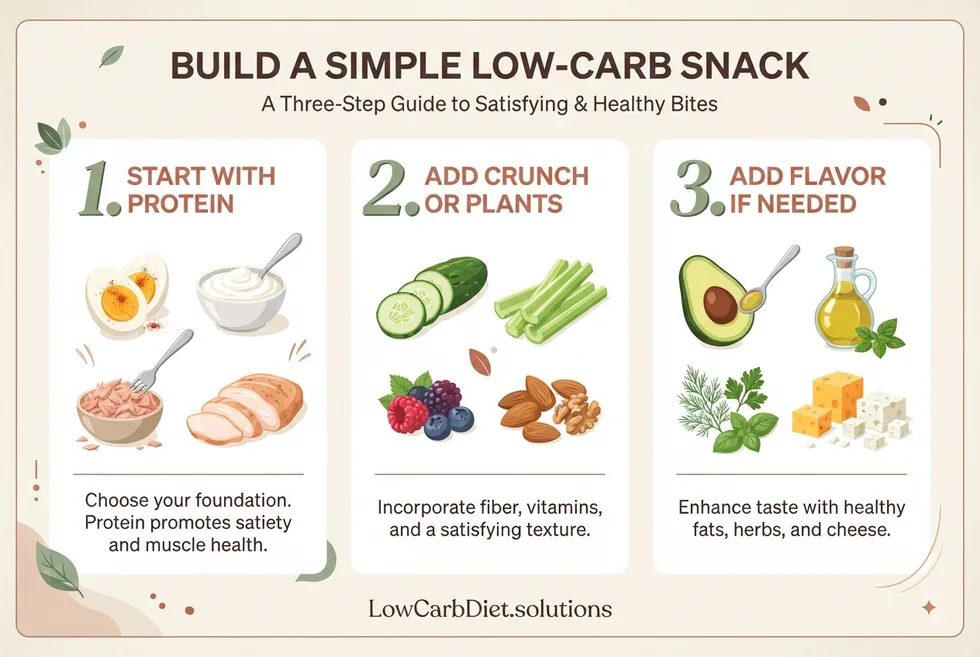
You don't need all 30. Pick three or four that suit how your days actually run, and keep those ingredients in the house.
Protein-First Snacks
1. Hard-boiled eggs
Keep a few cooked and in the fridge for the days you need something immediately. Pepper, paprika or everything-bagel seasoning if plain gets dull.
2. Greek yogurt with walnuts and cinnamon
Plain unsweetened Greek yogurt rather than the flavored tubs, which is where most of the added sugar sits. Chopped walnuts for crunch.
3. Cottage cheese with cucumber
Sliced cucumber, black pepper, fresh herbs. Good on the afternoons when you want savory rather than sweet.
4. Turkey and cheese roll-ups
Turkey slices rolled around cheese, with mustard, cucumber or lettuce if you want more texture. Worth checking the deli meat itself if sodium or added sugar matters to you, because formulations vary a lot between brands.
5. Tuna cucumber cups
Canned tuna with mayonnaise, pepper and a squeeze of lemon, spooned onto thick cucumber slices.
6. Smoked salmon and cucumber
Cucumber rounds, cream cheese, smoked salmon. Dill or lemon finishes it.
7. Chicken salad lettuce cups
Leftover cooked chicken with mayonnaise or Greek yogurt, celery and herbs, spooned into crisp lettuce leaves.
8. Mini caprese plate
Fresh mozzarella, a few cherry tomatoes, basil, olive oil, cracked pepper.
9. Cheese and olives
The easiest no-cook combination there is. Both are also easy to keep picking at, so put the portion on a plate.
10. Leftover chicken with avocado
Snacks don't have to look like snack food. A small plate of last night's chicken with a few slices of avocado usually does more than another bar.
Crunchy Low-Carb Snacks
Sometimes it isn't hunger and it isn't sugar. You just want crunch.
11. Cucumber with guacamole
Cut thick rounds and use them where crackers would go.
12. Celery with cream cheese
Cheap, quick, and easy to vary with herbs or smoked paprika stirred through the cheese.
13. Bell pepper with whipped feta
Peppers cut into strips, dipped into whipped feta or another savory cheese dip.
14. Radishes with herb dip
Radishes have a sharp, crisp bite that works well against a sour-cream or Greek-yogurt base.
15. Broccoli or cauliflower with dip
Raw florets do the job. Bottled dips and dressings are worth reading if you're tracking carbohydrate closely, because recipes differ considerably.
16. Almonds
A small handful, no preparation, travels anywhere. Pre-portioning helps if you tend to keep reaching into the bag.
17. Pecans with cheese
For when you want something richer. A few pecans and a piece of cheese is usually enough to feel like an actual snack rather than grazing.
18. Pumpkin seeds
Easy to keep in a desk drawer. Plain or lightly seasoned where you can get it.
19. Nut and seed mix
Make your own from almonds, pecans, walnuts and pumpkin seeds, and skip the dried fruit and candy that commercial trail mix leans on.
20. Roasted seaweed with an egg or cheese
Seaweed on its own is very light. With an egg or a piece of cheese it becomes a snack.
Low-Carb Snacks for a Sweet Tooth
Cutting carbs doesn't mean pretending you never want something sweet. It does help to keep the sweet thing simple.
21. Berries with Greek yogurt
A modest serving of strawberries, raspberries or blackberries with plain Greek yogurt.
22. Chia pudding
Chia seeds in unsweetened milk, left to thicken in the fridge. Vanilla, cinnamon, or a little of whichever sweetener you use.
23. Celery with peanut butter
Peanut butter without much added sugar. A label reading peanuts and salt is usually the simplest one on the shelf.
24. Strawberries with almond butter
A few sliced strawberries and a small spoonful of almond butter.
25. Cocoa Greek yogurt
Plain Greek yogurt stirred with unsweetened cocoa powder, plus vanilla or sweetener if it needs it. Chocolate-ish, without becoming a dessert project.
26. Ricotta with cinnamon
Ricotta works better as a quick sweet snack than most people expect. Cinnamon, vanilla, and a few berries if they fit your day.
If the sweet craving is the loudest thing in your afternoon, that's a different problem from hunger, and how to stop sugar cravings goes at it directly.
Portable Low-Carb Snacks
A snack is only useful if it exists at the moment you need it.
27. Egg, cheese and cucumber box
A boiled egg, cheese cubes and cucumber slices in a small container. The same thing the shops sell as a premium snack box, at a fraction of the price.
28. Turkey roll-ups and olives
Easy to put together the night before, and they hold up in a work bag.
29. Nuts plus a cheese portion
Almost no planning required. Use an insulated bag if the cheese will be out of the fridge for long.
30. Small low-carb snack plate
Two or three foods together, instead of hunting for one perfect snack:
- one boiled egg
- cucumber
- a few olives
- cheese
- a small handful of nuts
That's usually enough. It doesn't need to become a charcuterie board. For a measured version with a lemon and dill dip, try the 10-minute low-carb snack plate with cottage cheese dip.
What About Packaged Low-Carb Snacks?
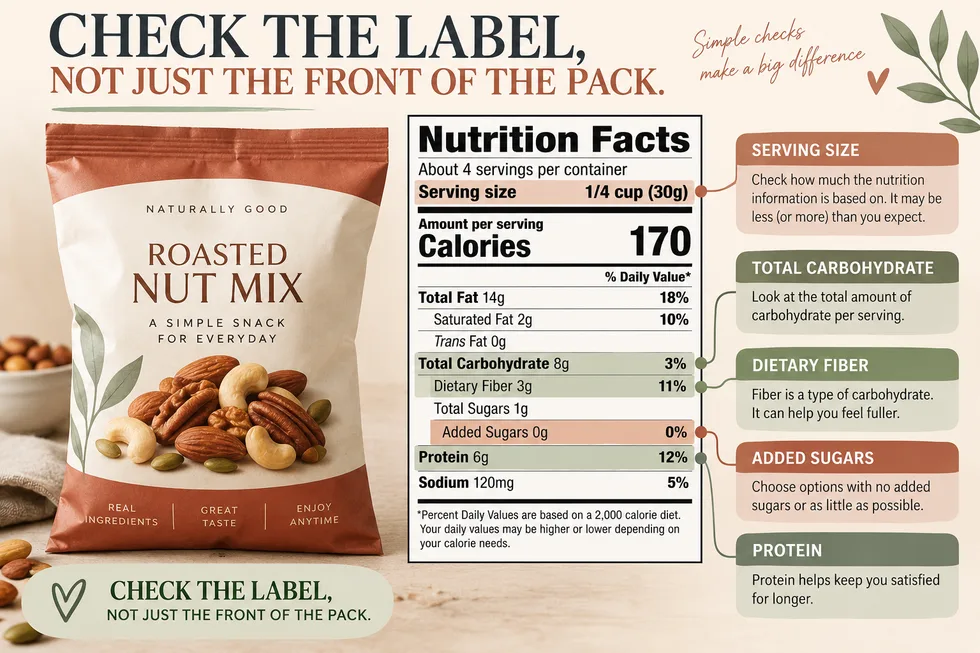
They can be useful. They're just not automatically better than food.
Protein bars, keto cookies, low-carb crackers and snack bars solve a real convenience problem. The trouble starts when the front of the package carries more weight than the panel on the back. If you want a starting inventory of ordinary food instead, the best keto-friendly foods list covers it.
Start With The Serving Size
The FDA is explicit about this: every nutrient amount on the label, calories included, refers to the serving size shown. Eat two servings and you double every number on the panel.
Look At Total Carbohydrate
"Net carbs" appears constantly on low-carb packaging, but it isn't part of the Nutrition Facts panel the FDA requires. Nothing on the label is obliged to tell you how the brand worked the figure out.
The American Diabetes Association's carb-counting guidance works from total carbohydrate, which already includes the sugars and the fiber. Some sugar alcohols and fibers can still contribute calories or affect blood glucose, so subtracting every gram of them can understate what you have actually eaten.
If you're eating low-carb casually, you can pick your own approach and it won't matter much. If you're counting carbohydrate because of diabetes or medication, the gap between the two numbers matters, and it's worth going through with your doctor or diabetes educator rather than working it out from packaging alone.
Check The Protein
A bar labeled keto can carry almost no protein. If you're eating because you're hungry, the honest comparison isn't other bars, it's an egg, a tub of Greek yogurt, or last night's chicken.
Look At Added Sugar
A product doesn't have to be at zero to fit a low-carb week. But the label tells you more than "natural", "keto-friendly" or "smart carb" printed on the front.
High-Protein Low-Carb Snacks for Busy Days
If the problem is that snacks never hold you to the next meal, pairing protein with something else is the first thing to test:
- Greek yogurt and walnuts
- cottage cheese and cucumber
- eggs and avocado
- chicken and cheese
- tuna and cucumber
- turkey and cheese
- smoked salmon and cream cheese
You don't need powder or bars for this unless the convenience genuinely earns its place. Food does the same job. For protein and net carbs per serving, and how many grams a snack really needs, see our guide to high-protein low-carb snacks.
Low-Carb Snacks for Work
Work snacks have to survive a real day. Packed the night before, eaten at a desk, no mess:
- boiled eggs
- cheese portions
- nuts
- turkey roll-ups
- Greek yogurt
- cottage cheese
- cucumber and dip
- homemade snack boxes
If the 3pm vending machine run happens most days, the thing that changes it is usually having something with you before you're hungry, rather than deciding to try harder at 3pm.
That's the same pattern behind the low-carb meal-planning guide: fewer decisions made while you're already tired.
What If You Want Something Crunchy and Salty?
Chips get missed more often than bread. It's easier to chase the texture than to rebuild the exact food:
- cucumber and dip
- celery and cream cheese
- radishes and feta dip
- roasted nuts
- pumpkin seeds
- seaweed snacks
- crisp bell pepper strips
- cheese crisps
Some packaged versions are perfectly fine. Just check that you actually like them, rather than working through expensive crackers because someone printed "2 net carbs" on the bag.
What If You Keep Snacking All Day?
If you're grazing from lunch until dinner, the snacks may not be the thing to fix.
Coffee for breakfast and a small salad for lunch makes 4pm hunger fairly predictable. Before you look for another snack, look at the meals. Are you eating enough food, with a real protein source, something that carries fiber, and enough variety that the meal is worth finishing?
The meal-planning guide builds around protein, low-carb vegetables, fat and flavor rather than a longer snack list. Sometimes the most effective snack change is a better lunch.
Steady between-meal hunger and heavy afternoon crashes can also be part of a wider blood-sugar pattern rather than a snack habit. The insulin resistance diet piece covers what that tends to look like day to day.
Five Low-Carb Snack Mistakes That Make Things Harder
1. Trying to reach zero
Low-carb doesn't mean every food has to be carb-free. Vegetables, nuts, yogurt and berries fit most lower-carb approaches, and the carbohydrate in them is usually where the fiber and the micronutrients are. The overall pattern matters more than driving individual numbers down.
2. Buying every keto product on the shelf
Specialty foods make low-carb considerably more expensive. Start with ordinary food, and add the convenience products that genuinely make a day easier.
3. Treating cheese and nuts as unlimited
Both are convenient and both are easy to keep picking at. A serving on a plate or in a container works better than eating from the packet.
4. Reading sugar-free as carb-free
It isn't. The total carbohydrate line on the Nutrition Facts label is the one that answers the question.
5. Changing everything at once
Starting low-carb doesn't require replacing breakfast, lunch, dinner, snacks, desserts and the contents of your pantry on a Monday morning. A few dependable options first is enough to work with.
Build a Three-Snack Backup System
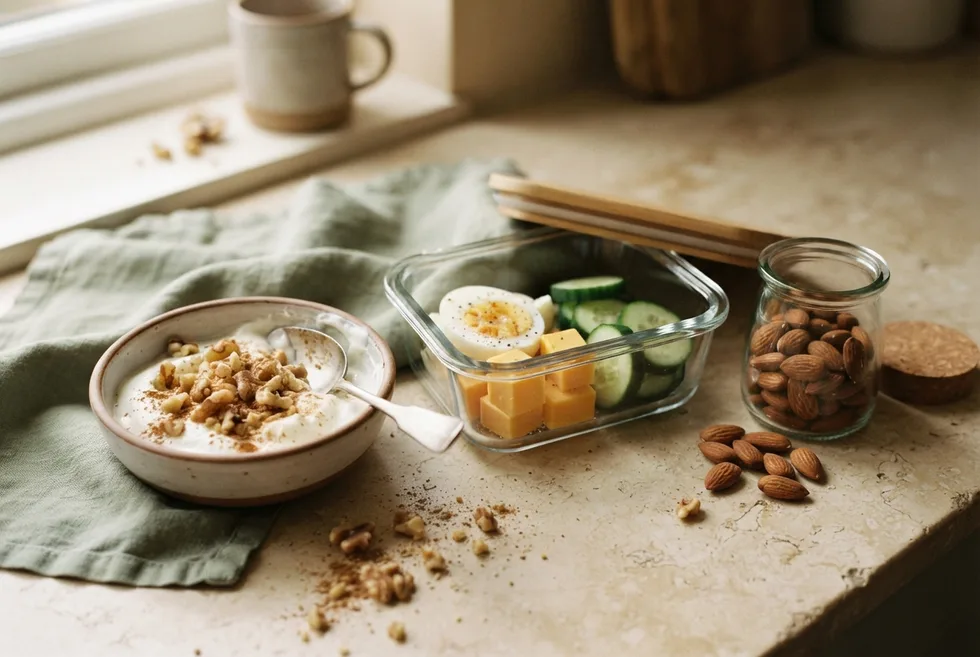
You could keep all 30 ideas. It's easier to pick three and stop deciding.
At home: Greek yogurt and walnuts. At work: the egg, cheese and cucumber box. For the days that go sideways: nuts, or a packaged snack you've already read the label on.
Then the snack question stops being a daily question. That tends to matter more than any individual food on the list: fewer variables, less noise, and a handful of things you can repeat without thinking about them.
If the rest of the routine is still loose, the 7-day low-carb meal plan and the low-carb grocery shopping list are the next two pieces.
FAQ
What are the best low-carb snacks?
There's no single best one. Protein-rich foods like eggs, Greek yogurt, cottage cheese, tuna, chicken and cheese are the useful starting points, particularly paired with vegetables, nuts or something else you actually enjoy eating.
What low-carb snacks can I take to work?
Boiled eggs, cheese, nuts, turkey roll-ups, Greek yogurt and small homemade snack boxes all travel well. An insulated bag helps if anything will sit out of the fridge for a few hours.
Are nuts low-carb?
Most nuts fit a lower-carb pattern, but carbohydrate content differs between varieties and portions add up quickly. Check the label if you're counting carbohydrate precisely.
Is fruit allowed as a low-carb snack?
Fruit isn't automatically out. Berries turn up often in lower-carb meals because a moderate portion fits many approaches. Your own carbohydrate target decides what works.
Are keto bars good low-carb snacks?
They're convenient, but the word keto on the package doesn't tell you much. Serving size, total carbohydrate, protein, added sugars and the ingredient list do.
Should I count net carbs or total carbs?
It depends on why you're counting. "Net carbs" isn't part of the FDA's required Nutrition Facts panel, and the American Diabetes Association's carb-counting guidance works from total carbohydrate, which already includes the fiber and the sugars.
If you are swapping snacks and staples, our guide to low carb substitutes and pantry staples compares the numbers.