Blood Sugar Friendly Snacks: What to Check Before You Eat
Four quick checks, and real numbers for ten familiar snacks.

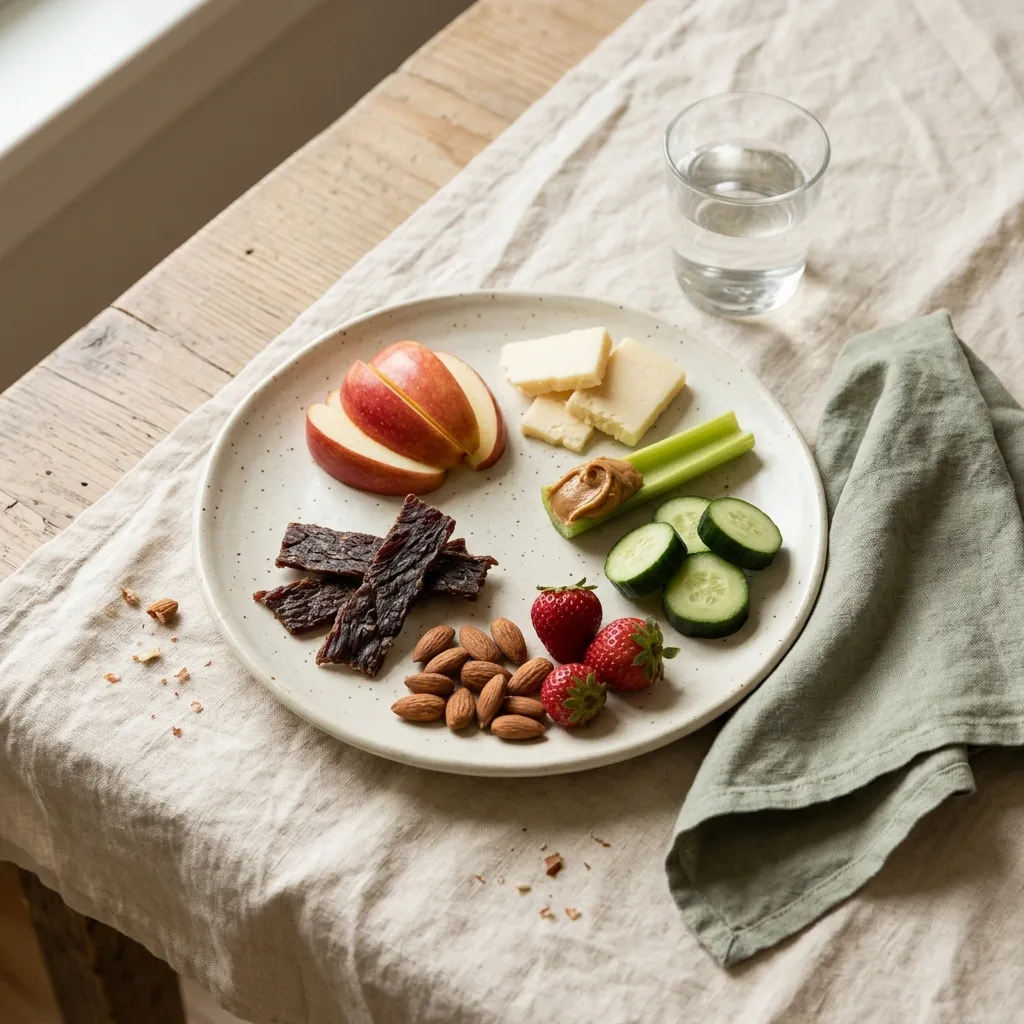
Blood sugar friendly snacks come down mostly to how much carbohydrate is in the portion you eat. Protein, fiber and an honest portion size do the rest. Below are four quick checks and real USDA numbers for ten snacks people reach for every day.
If you take diabetes medication, read this first
If you use insulin or a sulfonylurea, talk with your doctor before you cut the carbs in your snacks. Your dose was set around the way you eat now. NIDDK lists these medicines among the causes of low blood glucose, which for many people with diabetes means a reading below 70 mg/dL (3.9 mmol/L).
The same NIDDK page says that if you're at risk of lows, your meals and snacks should carry enough carbohydrate to keep you in your target range. If your care team has given you a snack plan, that plan comes first.
Four Things to Check in Any Snack
A snack can be low in carbs and still leave you hungry an hour later. Or it can look healthy and carry as much carbohydrate as a small meal. The front of the package won't tell you which.
1. How Much Carbohydrate Is in the Portion
Start here. The American Diabetes Association explains that carbs break down into glucose when they're digested, and blood glucose rises. So the number to read is total carbohydrate for the amount you'll actually eat, not the serving printed on the bag.
2. Whether There's Protein With It
A snack that's almost all carbohydrate, like pretzels or fruit on its own, is often the one that sends you looking for food again soon. Adding protein is the first change worth testing. The guide to high-protein low-carb snacks lists the protein in each option.
3. How Much Fiber Comes Along
Fiber is counted inside total carbohydrate, so a snack with more of it carries fewer net carbs for the same total. Vegetables, berries, nuts and seeds bring some. Raisins and crackers bring very little.
4. The Portion You Actually Eat
A small box of raisins and a handful from a big bag are two different snacks. Put the portion on a plate or in a container, and the numbers below stay true.
Familiar Snacks, Side by Side
These are snacks people often reach for when they're trying to eat well. Every number is from USDA FoodData Central, calculated for the portion shown.
| Snack | Portion | Total carbs (g) | Fiber (g) | Net carbs (g) | Protein (g) |
|---|---|---|---|---|---|
| Apple, with skin | 1 medium (182 g) | 25.1 | 4.4 | 20.7 | 0.5 |
| Banana | 1 medium (118 g) | 26.9 | 3.1 | 23.8 | 1.3 |
| Raisins | 1 small box (43 g) | 34.1 | 1.9 | 32.2 | 1.4 |
| Hard pretzels, salted | 1 oz (28 g) | 22.8 | 1.0 | 21.8 | 2.8 |
| Saltine crackers | 5 crackers (15 g) | 11.1 | 0.4 | 10.7 | 1.4 |
| Fruit yogurt, low fat | 6 oz container (170 g) | 32.3 | 0 | 32.3 | 7.4 |
| Air-popped popcorn | 3 cups (24 g) | 18.7 | 3.5 | 15.2 | 3.1 |
| Strawberries | 1 cup halves (152 g) | 11.7 | 3.0 | 8.6 | 1.0 |
| Baby carrots with hummus | 10 carrots (100 g) and 2 tbsp hummus (30 g) | 12.7 | 4.5 | 8.2 | 3.0 |
| Celery with peanut butter | 2 stalks (80 g) and about 2 tbsp peanut butter (32 g) | 9.5 | 2.9 | 6.6 | 7.7 |
Net carbs here means total carbohydrate minus fiber. Store-bought yogurt, hummus and peanut butter vary by recipe, so your own label may differ a little.
A few things stand out. A tub of fruit yogurt or a small box of raisins carries more carbohydrate than a medium banana, with almost no fiber. The two pairings at the bottom carry less carbohydrate than the apple, the banana, the pretzels or the popcorn, and celery with peanut butter has the most protein on the list.
That doesn't make the apple a bad snack. It means an apple on its own is about 25 grams of carbohydrate, and some people find it holds better next to a piece of cheese or a spoonful of nut butter. If you check your glucose, your own readings before and after a snack tell you more than any table. For the bigger picture, see what causes blood sugar spikes.
Where to Find More Snack Ideas
Once you know what to check, the list gets easy. There are 30 low-carb snack ideas for work, home and the car, and a separate guide to snacks ranked by protein.
Questions People Ask
What makes a snack blood sugar friendly?
Mostly the amount of carbohydrate in the portion you eat. Pairing it with protein, choosing foods that bring some fiber, and keeping the portion honest all help too. No single list works the same for everyone, so if you check your glucose, your own readings are the best guide.
How many carbs should a snack have?
There isn't one number that fits everyone. It depends on the rest of your day and, if you have diabetes, on the plan you've made with your care team. The table on this page shows how wide the range is: from under 10 grams to more than 30 for familiar snacks.