What Causes Blood Sugar Spikes? 7 Triggers Explained
Food is one trigger among several. Here are seven things to check before you blame the last meal.
You eat a familiar meal, then see a higher glucose reading than you expected. Or your blood sugar climbs before breakfast, when you haven’t eaten anything. It’s easy to blame the last thing on your plate and start crossing foods off the menu. So what causes blood sugar spikes?
Carbohydrate-containing meals are one common trigger, but glucose also responds to insulin, stress, illness, sleep, activity, and morning hormone changes. The American Diabetes Association explains that high blood glucose can have several causes, including insufficient insulin, changes in food or exercise, and physical or emotional stress. For how to build a plate that treats a meal more gently, see our guide to blood sugar friendly meals.
Start by looking at the circumstances around the reading. A useful explanation needs more than the name of the food you just ate.
If you take insulin or another diabetes medicine, read this first
This guide explains common reasons glucose rises. It can’t tell you what to do about your own readings or doses. Don’t skip, stop, or change a dose because of a high reading, and talk with the clinician who manages your medication before you cut back on carbohydrate. Your dose was set against the way you eat now, and NIDDK lists insulin, some other diabetes medicines, and not eating enough carbohydrate among the causes of low blood glucose.
Some warning signs need emergency care right away. They’re listed under When to get medical help.
A rise after eating is not automatically a problem
Blood sugar isn’t supposed to stay perfectly flat. As the American Diabetes Association describes it, your body breaks carbohydrate down into glucose, which raises the level in your blood, and your pancreas releases insulin to help your cells absorb it. A rise after eating is part of that process.
The word “spike” gets used loosely. A noticeable rise on a graph doesn’t, by itself, tell you whether you have a health problem. For someone with diabetes, the agreed target range and care plan give the context for reading a result.
If you’re worried about diabetes but haven’t been diagnosed, ask your clinician about testing. NIDDK explains that prediabetes is diagnosed with blood tests, not by how you felt after lunch.
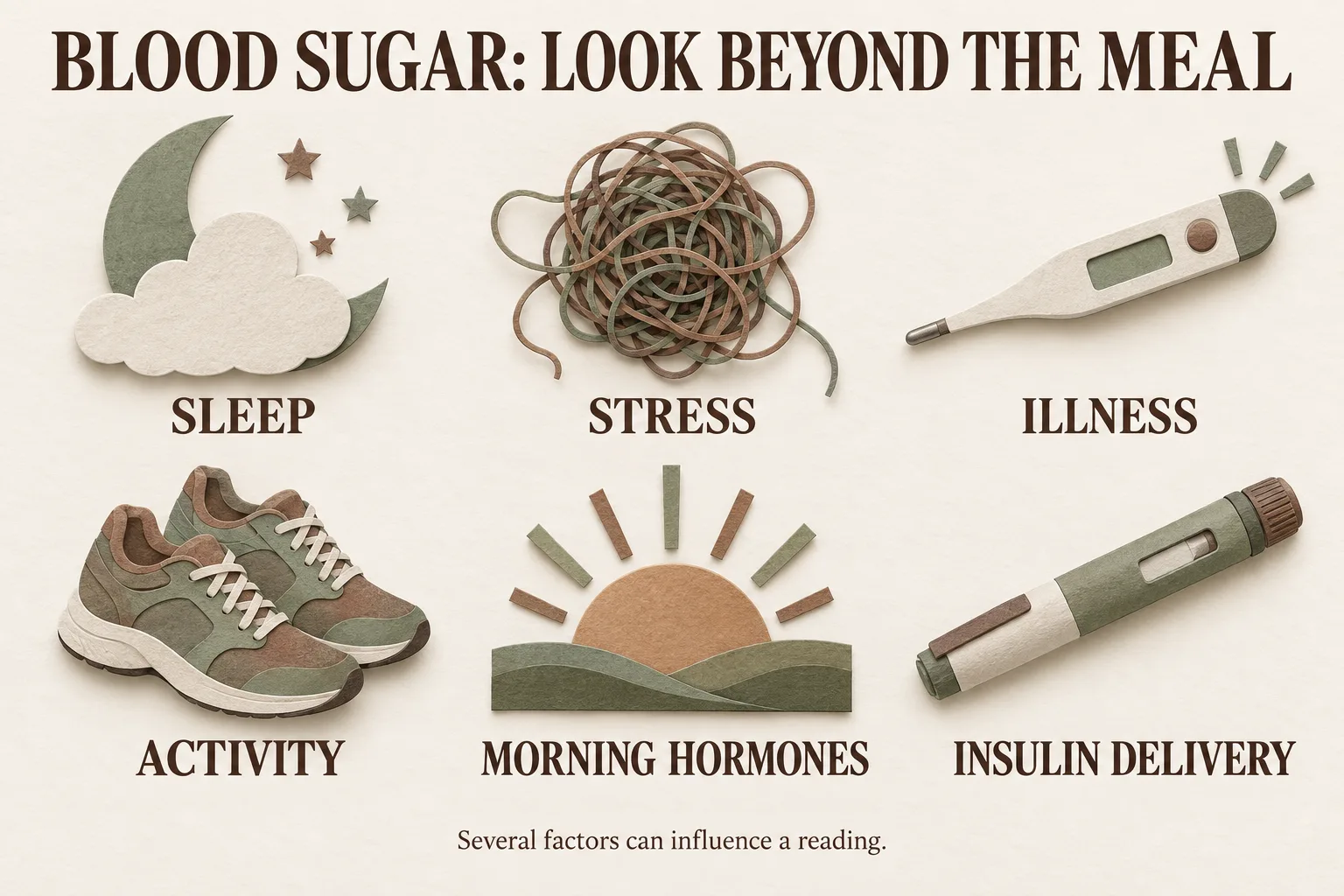
What causes blood sugar spikes? Seven factors to check
1. More carbohydrate than you realized
Bread, rice, cereal, potatoes, juice, and sweetened drinks can all add to the same meal’s carbohydrate total, and starch counts as much as sugar does.
Picture a sandwich lunch with chips and a sweet drink. Asking only whether the bread has added sugar misses much of the meal.
Useful questions include:
- Was the portion larger than usual?
- Did the meal include several carbohydrate sources?
- Did a drink or sauce add something you overlooked?
The type of carbohydrate matters too. The ADA’s guide to carbs says the goal is to choose nutrient-dense carbs: rich in fiber, vitamins, and minerals, and low in added sugars, sodium, and unhealthy fats. That doesn’t mean every carbohydrate-containing food needs to disappear.
For practical meal options, see our guide to foods that don’t spike blood sugar. It explains why portions still matter, even with foods that turn up on “no-spike” lists. If you are working out how much carbohydrate to aim for, how many carbs per day on a low carb diet sets out the ranges.
2. Your body is having difficulty using insulin
Insulin resistance means your body doesn’t respond to insulin the way it should, and blood glucose can rise as a result. Food matters, but so does how your body handles that food.
That’s why comparing your reading with someone else’s after the same meal isn’t especially useful. You may not be starting from the same place.
NIDDK’s insulin resistance and prediabetes guide also notes that people with these conditions usually have no symptoms. Feeling fine doesn’t rule them out, and feeling tired doesn’t diagnose them.
Repeated concerns deserve proper testing and a conversation about your overall health, not a longer and longer list of forbidden foods. Our insulin resistance diet guide covers how eating patterns fit in.
3. Stress or illness
A difficult week or an infection can complicate glucose management. The ADA includes both emotional stress and illness among the possible causes of high blood glucose.
When you’re sick, the hormones your body releases to fight the illness can raise your blood sugar too, so you may see higher readings even while eating less. The CDC’s sick-day guidance for people with diabetes says to keep taking your insulin and diabetes pills as usual and to test your blood sugar every 4 hours.
If you have diabetes, ask your care team for a sick-day plan before you need one. NIDDK advises asking whether your meal plan, activity, or medicines should change when you’re sick. The plan should also say what to monitor and when to call for help. Don’t assume that eating less means you should stop insulin.
4. Too little sleep
A poor night can change how your body handles glucose. The CDC notes that even one night of too little sleep can make your body use insulin less efficiently.
If a familiar breakfast produces an unexpected reading, note how you slept alongside the meal. That detail can help when you review the pattern.
It doesn’t prove sleep caused that particular result. It just gives you and your clinician a fuller picture than “breakfast went wrong.”
5. A change in your usual activity
The ADA lists exercising less than planned as one possible contributor to high glucose. Think about whether an ordinary day of errands and movement turned into a long day sitting down.
NIDDK’s diabetes management guide says physical activity may help lower blood glucose, blood pressure, and cholesterol levels. Talk with your health care team before starting a new activity or changing how much you do, and choose activity that fits your health and abilities.
Exercise isn’t an automatic fix for a high reading, though. The ADA cautions against exercise when high glucose comes with ketones, because exercising then may push your glucose even higher. Follow your care plan instead of trying to exercise the number down.
6. Morning hormone changes
Blood sugar can rise before you eat. The CDC describes the dawn phenomenon as a surge of hormones early in the morning that can push blood sugar up in people with diabetes.
It’s one possible explanation for a higher morning reading, not a diagnosis you can make from the clock alone. If your reading rises before breakfast, see why blood sugar can be higher in the morning.
If it keeps happening, take your readings and your medication schedule to your diabetes team. Guessing at a new fasting routine or changing an evening dose yourself can make the situation harder to assess.
7. Missed insulin or a delivery problem
For someone who needs insulin, a missed dose or interrupted delivery can cause a dangerous rise in glucose. The CDC lists missing insulin shots, the wrong insulin dose, and a clogged insulin pump among the most common causes of diabetic ketoacidosis.
If you use a pump, follow the troubleshooting and backup instructions from your care team. A persistent high reading may call for action under that plan, not another adjustment to your meals.
Record any recent medication changes too, so your clinician or pharmacist can judge whether they’re relevant. This article can’t determine a replacement dose or medication schedule.
Check the reading before blaming the meal
Testing technique can affect a finger-prick result. The FDA advises washing and drying your hands before testing and following your meter’s instructions closely. It also says to store the meter and test strips as the manufacturer directs, because improper storage can make results less accurate.
If a result seems unexpected, follow your device’s instructions for checking it. The FDA says a control solution test is worth running after you drop your meter or when you get unusual results that don’t agree with the way you feel. Don’t dismiss a high reading as a faulty test when you also feel unwell.
With a continuous glucose monitor (CGM), follow the manufacturer’s and your care team’s guidance about when to confirm a reading with a finger-prick test. NIDDK notes that for safety you may sometimes need to compare your CGM readings with results from a standard blood glucose meter.
Keep a short record of the circumstances
If you already monitor glucose, add a few details to your usual record. NIDDK recommends keeping a record of your self-checks with the date and time, the results, and other information, such as what you ate or what physical activity you did that day.
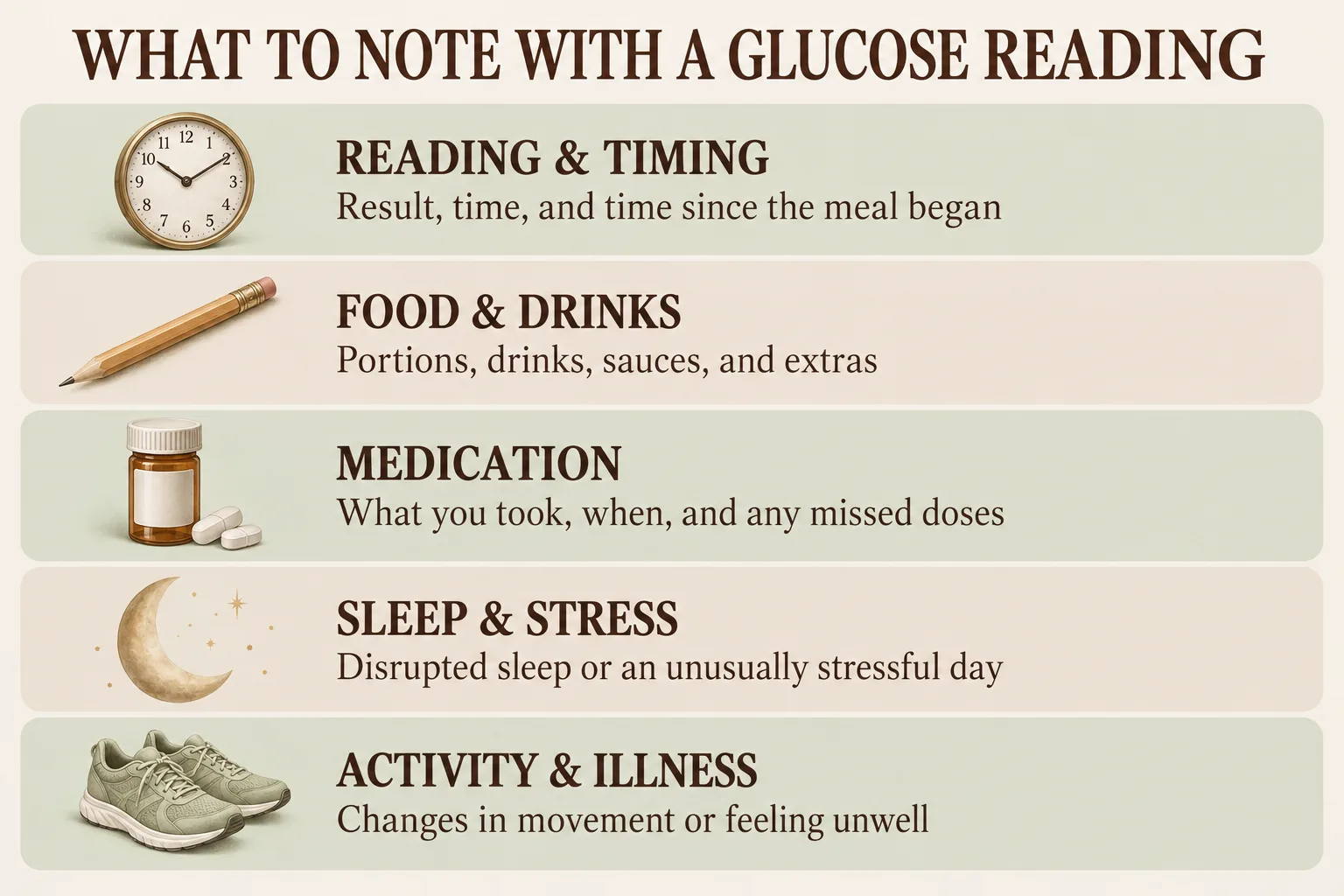
- Reading and timing
- The result, the time, and how long since the meal began.
- Food and drinks
- Approximate portions, drinks, sauces, and extras.
- Medication
- What you took and when, including missed doses.
- Sleep and stress
- Unusual sleep disruption or a particularly stressful day.
- Activity and illness
- A change in movement, an infection, or feeling unwell.
Keep the notes brief enough to use. “Usual lunch, larger rice serving, poor sleep” is more informative than “bad day.”
If you don’t currently monitor glucose, ask your clinician whether testing would help before you start a new tracking routine.
When to get medical help
Contact your care team if your readings repeatedly fall outside your agreed range. Increased thirst, frequent urination, blurred vision, or fatigue also deserve attention, especially if they’re new. NIDDK lists these as possible symptoms of high blood glucose.
Go to the emergency room or call 911 right away for trouble breathing, fruity-smelling breath, or vomiting when you can’t keep food or drinks down. These can be signs of diabetic ketoacidosis, which is sometimes the first noticeable sign of diabetes in someone who hasn’t been diagnosed yet. The CDC also lists blood sugar that stays at 300 mg/dL or above among the signs that need emergency care. Don’t wait to finish a food diary.
Questions about blood sugar spikes
Can blood sugar rise without eating?
Yes. Illness, stress, insufficient insulin, and the early-morning hormone surge called the dawn phenomenon can all contribute. A high reading before breakfast doesn’t automatically mean you ate the wrong dinner. Check how you slept, whether you’re fighting something off, and whether a dose was missed before you rewrite your evening meal.
Can coffee affect blood sugar without added sugar?
For some people, yes. The CDC notes that some people’s blood sugar is extra-sensitive to caffeine, even in coffee without sweetener. If you already monitor, add coffee and its timing to your notes rather than assuming everyone needs to avoid it.
Does an afternoon crash prove I had a glucose spike?
No. Tiredness alone can’t tell you what your glucose did, and it has many possible causes. If you monitor, compare the feeling with an actual reading. If the crashes keep happening, discuss them with your clinician instead of diagnosing a spike from the feeling alone.
Should I cut out all carbs after a high reading?
An unexpected reading needs context first. Review the meal, the other possible contributors, and your care plan. If you take diabetes medication, talk with your diabetes team before making major food changes. The ADA notes that low blood glucose can sometimes be caused by not consuming enough carbohydrates or by an imbalance in medications.
Start with one familiar meal
Choose a meal you eat regularly and look at what it actually contains, including drinks and portions. Then use our food and blood sugar guide to find a practical adjustment you can repeat.
If breakfast is the meal you keep second-guessing, 5 Low-Carb Breakfasts for Steadier Blood Sugar gives you five to start from.
Keep the surrounding circumstances in view. Useful notes can help you work out what to discuss with your care team without rebuilding your whole diet around one unexpected result.
This article is general information, not medical advice. If you take insulin or another diabetes medicine, talk with the clinician who manages it before you change how you eat or how you take it.