5 Low-Carb Breakfasts for Steadier Blood Sugar
A breakfast you can repeat is more useful than another list of foods to avoid. Start with one of these five recipes and pay attention to the whole meal.
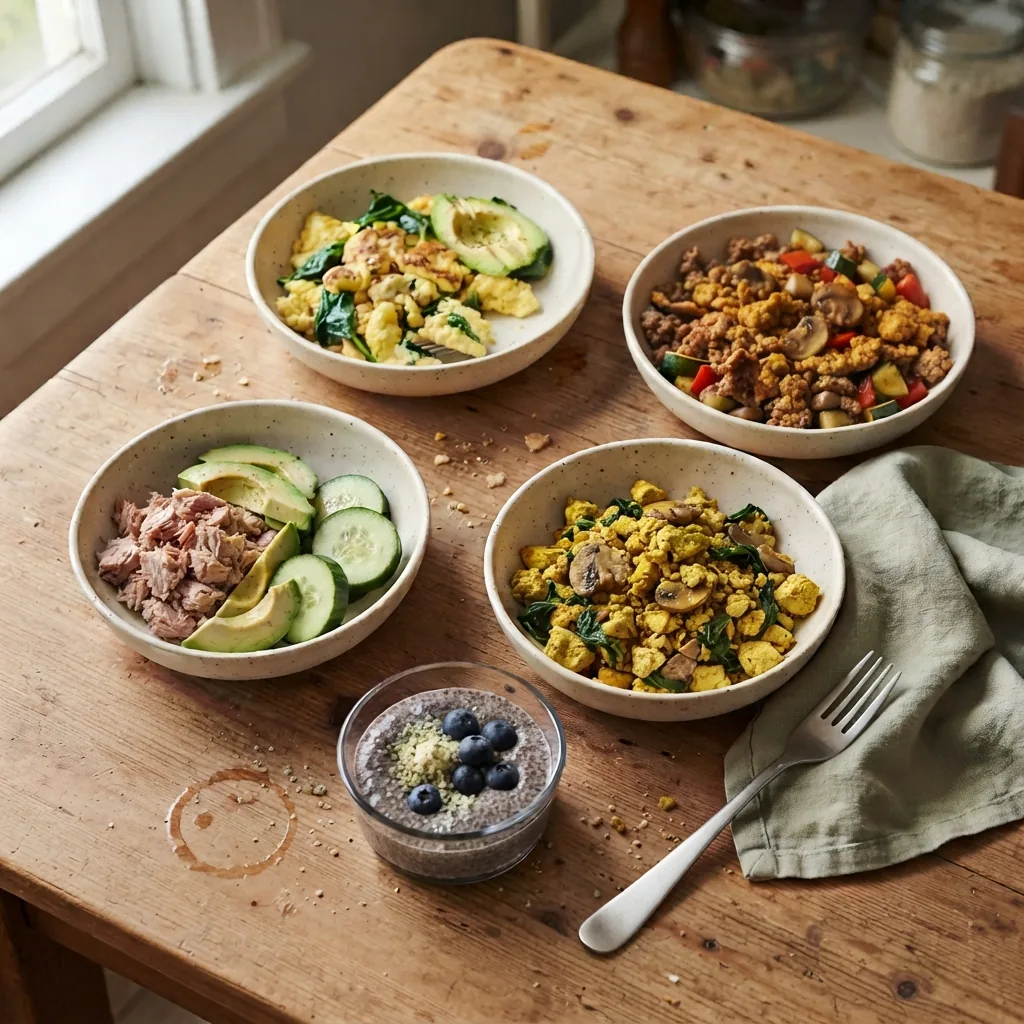
A low carb breakfast for blood sugar can start with ordinary ingredients: eggs, tofu, fish or turkey, plus vegetables, seeds or avocado. These five recipes give you practical alternatives to a breakfast built around sweetened cereal, pastries or toast, without a zero-carb rule.
The aim is a meal that fits your morning and may support steadier blood sugar. It is not a guarantee that your glucose will stay flat, and it does not mean all carbohydrates need to disappear.
Medication safety: if you use insulin, a sulfonylurea or another glucose-lowering medicine that can cause low blood sugar, a large cut in breakfast carbohydrate can change your usual pattern. Do not change medication on your own. Talk with your clinician or diabetes care team before substantially reducing carbohydrate.
NIDDK explains why insulin and some diabetes medicines can raise the risk of low blood glucose when you eat less carbohydrate. Keep following your prescribed medication and monitoring plan.
What makes low-carb breakfasts useful for blood sugar?
Carbohydrate is one part of the picture. The American Diabetes Association’s guide to carbohydrates explains that carbohydrate foods affect blood glucose and recommends more non-starchy vegetables and fewer refined foods and sugary drinks. Choosing a smaller amount of starch or added sugar at breakfast is one practical way to change the meal.
Added sugar and total carbohydrate are not the same thing. A breakfast can have no added sugar and still contain a lot of carbohydrate from bread, cereal, oats, fruit or milk. The CDC’s carb-counting guide points to total carbohydrate on the Nutrition Facts label, and notes that how much carbohydrate suits you depends on your age, weight, activity level and more.
What you eat with the carbohydrate matters too. The CDC’s meal-planning guidance says eating carbohydrate with protein, fat or fiber slows how quickly blood sugar rises. The American Diabetes Association’s 2026 Standards of Care say that reducing carbohydrate can improve glycemia for some adults with diabetes, and that eating plans should be individualized.
Breakfast itself has been studied. In a 2023 randomized trial of 121 adults with type 2 diabetes, a low-carbohydrate breakfast (about 8 grams of carbohydrate) was compared with a low-fat breakfast (about 56 grams) for 12 weeks. The low-carbohydrate group had lower HbA1c and better continuous glucose monitoring results. It is one trial in one population, not a rule for everyone, and the meals were not the recipes below.
That does not make protein or fat a shield against carbohydrate. Adding avocado to a large sweetened breakfast leaves the carbohydrate in the meal. Start by looking at the ingredients and portions you actually eat, including the drink beside the plate.
For the broader approach, see our insulin resistance diet guide. Here, the focus is narrower: choosing and preparing breakfast without needing a different rule for every morning. If you want to know why some meals raise glucose more than others, read what causes blood sugar spikes. For a full savory recipe in the same pattern, try the turkey breakfast bowl with cauliflower rice.
Five breakfasts to choose from
These recipes use the ingredient quantities from our dairy-free breakfast guide, organized below so you can cook from the page. Preparation times are the source estimates, not kitchen-tested promises. Only the egg recipe specifies servings; the other quantities describe a batch, not a prescribed portion.
| Breakfast | Preparation estimate | Best fit |
|---|---|---|
| Scrambled eggs with spinach and avocado | 10 minutes | A freshly cooked plate |
| Turkey and mushroom skillet | 15 minutes | A warm, egg-free meal |
| Tuna, avocado and cucumber plate | 5 minutes | No cooking |
| Tofu scramble with mushrooms and spinach | 12 minutes | A plant-based skillet |
| Overnight chia and hemp breakfast bowl | 5 minutes + overnight soak | Preparation the night before |
About nutrition: no carbohydrate, calorie or protein totals are given here. Brand differences, unspecified portions and the protein powder scoop would make a guessed number misleading. If you count carbs, use your actual labels and measured serving. These are culinary low-carb options, not a verified carb allowance.
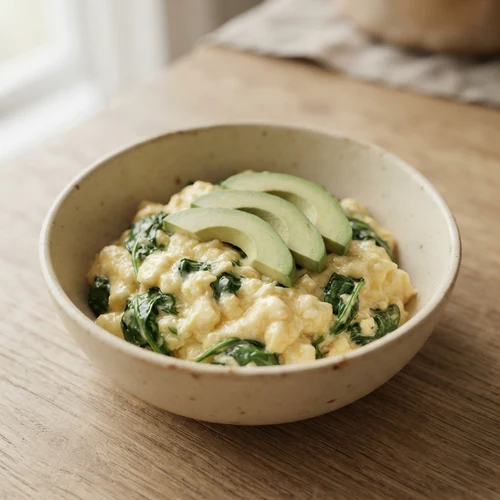
Scrambled eggs with spinach and avocado
A warm breakfast without toast as the base. The avocado goes on at the end so it keeps its texture.
Ingredients
- 4eggs
- 1tablespoon olive or avocado oil
- 2cups fresh spinach
- 1/2avocado (sliced)
Instructions
- 1
Whisk the eggs in a bowl. Heat the oil in a skillet over medium heat.
- 2
Add the eggs and gently stir with a spatula as they set. Fold in the spinach near the end of cooking and continue until it wilts and the eggs are firm, with no runny liquid.
- 3
Divide between two plates and top with the sliced avocado. Serve immediately.
Timing: Source preparation estimate; a separate cooking time is not recorded.
Equipment: Mixing bowl, Whisk or fork, Skillet, Spatula.
Kitchen note: Best made fresh. If you need more food, adjust the meal to your appetite and eating plan rather than assuming one listed serving will suit everyone.
Allergens: Eggs.
Low-Carb Diet Solutions · https://www.lowcarbdiet.solutions/low-carb-breakfasts-steadier-blood-sugar/#eggs-spinach-avocado
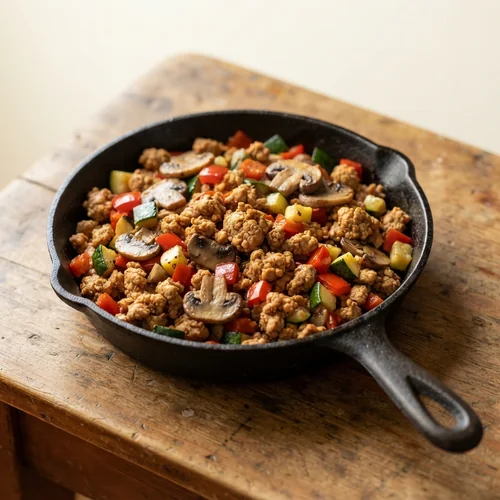
Turkey and mushroom skillet
An egg-free savory option with ground turkey, mushrooms, pepper and zucchini. Useful when you want a hot breakfast without cheese or bacon.
Ingredients
- 6ounces ground turkey
- 1tablespoon olive oil
- 1cup mushrooms (sliced)
- 1/2red bell pepper (diced)
- 1/2zucchini (diced)
Instructions
- 1
Heat the olive oil in a skillet. Add the ground turkey and break it apart as it cooks.
- 2
When the turkey is browned, add the mushrooms, bell pepper and zucchini. Cook, stirring, for 5 to 6 minutes or until the vegetables are tender.
- 3
Check the turkey with a food thermometer: it must reach 165°F (74°C). Continue cooking if needed, then serve.
Timing: Source preparation estimate; cook to the temperature in step 3 rather than the clock alone.
Equipment: Skillet, Spatula, Food thermometer.
Kitchen note: The source does not specify a serving count. The amounts make one batch; choose a portion that fits your meal plan. Browning alone does not confirm poultry is safely cooked.
Allergens: No major allergens in the listed plain ingredients; check packaged products.
Cooking temperature follows the FoodSafety.gov safe-temperature chart, which also covers eggs and reheated leftovers.
Low-Carb Diet Solutions · https://www.lowcarbdiet.solutions/low-carb-breakfasts-steadier-blood-sugar/#turkey-mushroom-skillet
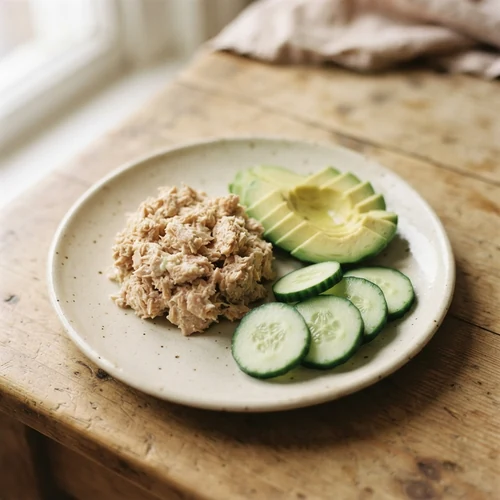
Tuna, avocado and cucumber plate
A no-cook breakfast for mornings when the stove is one task too many. Cucumber adds crunch, while avocado softens the texture of the tuna.
Ingredients
- 15-ounce can tuna (drained)
- 1tablespoon olive oil or avocado-oil mayonnaise
- 1/2avocado (sliced)
- 1cup cucumber (sliced)
Instructions
- 1
Drain the tuna, transfer it to a bowl and separate the flakes with a fork.
- 2
Mix in the olive oil or avocado-oil mayonnaise.
- 3
Arrange the sliced avocado and cucumber on a plate and add the tuna.
Timing: Source preparation estimate; no cooking required.
Equipment: Bowl, Fork, Knife.
Kitchen note: The source does not specify a serving count; the quantities make one batch. If preparing components ahead, keep the cucumber separate from the tuna until serving. Check the mayonnaise label for added sugar and allergens.
Allergens: Fish; mayonnaise may contain egg.
Low-Carb Diet Solutions · https://www.lowcarbdiet.solutions/low-carb-breakfasts-steadier-blood-sugar/#tuna-avocado-cucumber
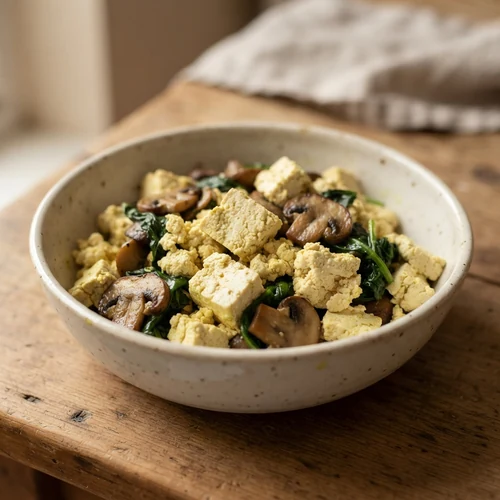
Tofu scramble with mushrooms and spinach
A plant-based breakfast with a pan-cooked texture. Turmeric adds color; it is included as a seasoning, not as a blood-sugar treatment.
Ingredients
- 8ounces firm tofu
- 1tablespoon oil
- 1pinch turmeric
- 1cup mushrooms (sliced)
- 1cup spinach
Instructions
- 1
Drain the tofu and crumble it into bite-sized pieces.
- 2
Heat the oil in a skillet. Add the tofu, turmeric, mushrooms and spinach.
- 3
Cook, stirring, for 6 to 8 minutes until heated through and the vegetables soften.
Timing: Source preparation estimate, including the stated 6 to 8 minutes in the pan.
Equipment: Skillet, Spatula.
Kitchen note: The source does not specify a serving count; the quantities make one batch. Use plain firm tofu rather than a sweetened or pre-sauced version. Protein and carbohydrate amounts vary by brand.
Allergens: Soy.
Low-Carb Diet Solutions · https://www.lowcarbdiet.solutions/low-carb-breakfasts-steadier-blood-sugar/#tofu-mushroom-scramble
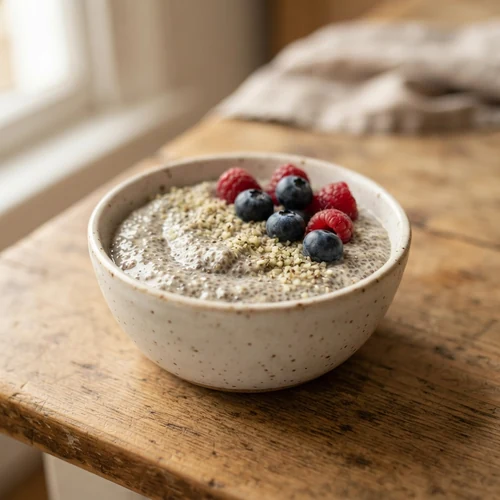
Overnight chia and hemp breakfast bowl
A spoonable, egg-free option prepared the night before. The protein powder is part of the recipe, so compare its label as carefully as the milk label.
Ingredients
- 3tablespoons chia seeds
- 2tablespoons hemp hearts
- 1cup unsweetened almond milk
- 1scoop pea or other plant-based protein powder (use the product’s scoop)
- a few berries (for topping; amount not specified in the source)
Instructions
- 1
Mix the chia seeds, hemp hearts and unsweetened almond milk in a bowl or jar.
- 2
Cover and leave in the refrigerator overnight.
- 3
In the morning, stir in the protein powder and top with a few berries.
Timing: 5 minutes of preparation plus an overnight soak; total time is not specified.
Equipment: Bowl or jar with a lid, Spoon.
Kitchen note: The source does not specify a serving count; the quantities make one batch. Scoop sizes and berries are not standardized here, so a defensible carbohydrate total needs your actual product and weighed portion.
Allergens: Almonds; check the protein powder for additional allergens.
Low-Carb Diet Solutions · https://www.lowcarbdiet.solutions/low-carb-breakfasts-steadier-blood-sugar/#chia-hemp-bowl
Two more no-cook bowls
These two are assemblies rather than recipes, so there are no printable cards. Both lean on a protein base you can buy ready to use.
Greek yogurt, chia and walnut bowl. Stir 1 tablespoon of chia seeds and some cinnamon into 3/4 cup of plain unsweetened Greek yogurt. Top with 2 tablespoons of chopped walnuts and a few raspberries or blackberries. A flavored yogurt cup can carry a lot of added sugar, so start plain and compare the total carbohydrate line across brands, not just “no added sugar.” For a dairy-free version, choose an unsweetened high-protein alternative and check its label.
Savory cottage cheese bowl. Spoon 1 cup of plain cottage cheese into a bowl. Add 1/2 cup each of diced cucumber and chopped tomato, 1 tablespoon of pumpkin seeds, a teaspoon of olive oil, fresh dill or chives and black pepper. Cottage cheese brands differ in carbohydrate, so read the label rather than assuming. Plain Greek yogurt works as a savory base if you prefer it.
Want a make-ahead option? The low-carb spinach and cheese egg muffins keep for the week, and our keto-friendly breakfast ideas and dairy-free options add more choices.
What about fruit, oatmeal or whole-grain toast?
A low-carb approach does not require treating every carbohydrate like added sugar. Berries, oats, whole grains, legumes and dairy can fit different eating patterns. The question is whether the amount and the combination suit your goals and your own response. The ADA’s nutrition guidance favors minimally processed, higher-fiber carbohydrate sources over declaring whole categories off limits.
If you want oatmeal or toast, treat it as the adjustable part of the plate rather than the base. Keep the eggs or yogurt and vegetables the same, then change the portion or type of carbohydrate and see how you respond. That is very different from starting with sweetened cereal, juice and toast and assuming they all behave alike. For more on food choices, see foods that don’t spike blood sugar. For the same idea at lunch and dinner, see blood sugar friendly meals.
How to learn what works for your own blood sugar
If you check your glucose or use a continuous glucose monitor, one reading should not turn a food into a permanent “good” or “bad.” Compare similar meals under similar conditions. Stress, sleep, activity, illness and medication timing all move the number from day to day, so look for patterns, not one result.
The goal is not a flat line after every meal; eating naturally raises glucose. A better question is whether the breakfast fits the targets you agreed with your healthcare team and keeps you satisfied through the morning. A lower-carb breakfast is one tool, not a treatment plan. The wider pattern is covered in our insulin resistance diet guide.
Make the breakfast work as a whole meal
Look beyond the front label. “Plant-based,” “keto” and “no added sugar” do not tell you the carbohydrate content of your portion. Check the nutrition panel on almond milk, protein powder, mayonnaise and any sauce you add. A scoop is a product measure, not a universal size.
Count the drink if you count carbohydrates. Sweetened coffee, juice and milk-based drinks belong in the same meal calculation. You can choose water or an unsweetened drink without needing to replace every familiar food at once.
Keep the next step small. Choose one breakfast to make fresh and one that needs little morning work. Write down the ingredients before shopping. Our breakfast planning guide can help you organize the week; the five recipes here do not require a strict keto target.
Separate observations from a diagnosis. Notice whether the meal is satisfying and practical to repeat. Hunger or tiredness alone cannot establish what your glucose did. If glucose monitoring is part of your care, use the schedule and targets your clinician gave you. Persistent symptoms deserve a medical conversation, not another round of food restriction.
Common questions
Will these breakfasts prevent a blood sugar spike?
No recipe can guarantee that. These meals offer ways to use less bread, sweetened cereal or added sugar at breakfast. Your portion, products, medication and individual response still matter. If you already monitor glucose, follow your care team’s testing plan rather than judging the meal from its name.
Can I eat fruit with a low-carb breakfast?
Yes, fruit can fit. The chia bowl includes a few berries, but that is not a measured carbohydrate allowance. Choose a portion that suits your plan and count it if you count carbohydrates. A low-carb breakfast does not need to exclude every food that contains carbohydrate.
Which options work without eggs or dairy?
The turkey skillet, tuna plate, tofu scramble and chia bowl contain no dairy or eggs in their basic ingredients. Choose olive oil rather than mayonnaise for the tuna if you avoid eggs. Read the protein powder and other packaged-food labels, especially when avoidance is for an allergy.
Is a low-carb breakfast the same as a keto breakfast?
No. A low-carb breakfast uses less carbohydrate than a cereal, toast or pastry breakfast. It does not have to meet a strict ketogenic limit, and none of these recipes is held to one.
Will a low-carb breakfast keep my blood sugar steady all day?
Not necessarily. A 2023 randomized trial in adults with type 2 diabetes found better glucose measures after 12 weeks of low-carbohydrate breakfasts. That does not mean one breakfast decides the rest of your day, or that the same result applies to everyone.
What if I take diabetes medication?
Be cautious about a large carbohydrate reduction. Insulin and some other glucose-lowering medicines, including sulfonylureas, can cause low blood sugar. Work with your clinician or diabetes care team rather than changing medication on your own.
How many carbs are in each breakfast?
This article does not publish nutrition totals because the source recipes do not provide a verified calculation for these versions. Several also lack a serving count. Use your product labels, measured ingredients and actual portions with your dietitian or usual tracking method if a precise count is needed.
Choose tomorrow’s breakfast
Pick the recipe that fits the ingredients and time you have. Make that one meal, then decide whether it is worth repeating. For more choices, explore our low-carb recipe collection.
Food images are AI-generated illustrations of the recipes, not photographs of tested recipe yields.