Insulin Resistance Diet: What Actually Steadies Blood Sugar
Insulin resistance makes meals unpredictable. The fix is less about a perfect food list and more about the glucose load you send at once.

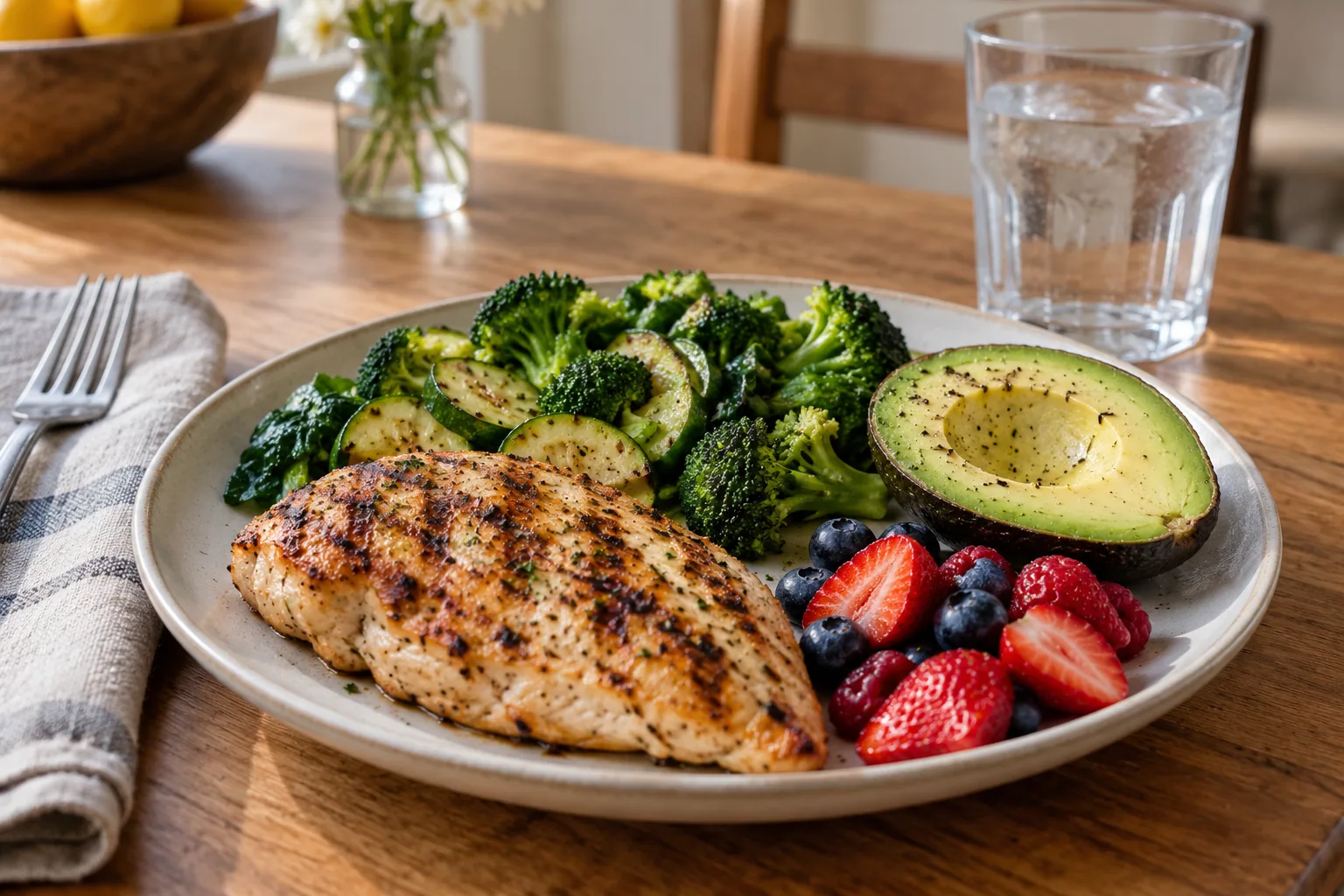
Some meals hold you for hours. Others leave you hungry by ten thirty, and nothing about the plate looked different.
That unpredictability is what sends most people looking for an insulin resistance diet in the first place. Energy drops an hour after eating. Cravings arrive when you have clearly eaten enough. The afternoon turns into a fog you have to push through.
What gets lost in the food lists is that an insulin resistance diet is not a search for the perfect set of approved foods. It is a way of reducing how much glucose your body has to deal with at any one time, which is a smaller and more practical job than it sounds.
It also runs on two clocks. Some things change within days, and they are things you feel. Others take weeks or months, and they show up in numbers rather than in how your afternoon goes. Knowing which is which is most of what keeps people from quitting in week three.
What an insulin resistance diet is actually trying to do
Carbohydrate breaks down into glucose, and that glucose enters your bloodstream after you eat. Insulin is the signal that moves it out of the blood and into your cells. When cells respond to that signal readily, a modest amount of insulin does the job.
The National Institute of Diabetes and Digestive and Kidney Diseases describes insulin resistance as a condition in which the body does not respond to insulin the way it should. When that happens, more insulin may be needed to handle the same amount of glucose, and the pancreas may not always keep up with the demand.
You cannot change how readily your cells respond by deciding to. What you can change is the size of the demand you keep sending. A smaller glucose load asks for less insulin. Fewer large loads across the day means fewer of those demands.
Worth saying clearly what that does not mean. It does not mean eliminating carbohydrate, and it is not a moral position on bread. It is a question of quantity and pattern, which is a much easier thing to adjust than a belief system.
Key takeaway: The target is the size and frequency of the glucose load, not the presence of carbohydrate.
Why blood sugar spikes matter
After a meal that is heavy on quickly absorbed carbohydrate, blood glucose rises fast. Insulin follows. Then glucose comes down, sometimes further and more abruptly than it went up.
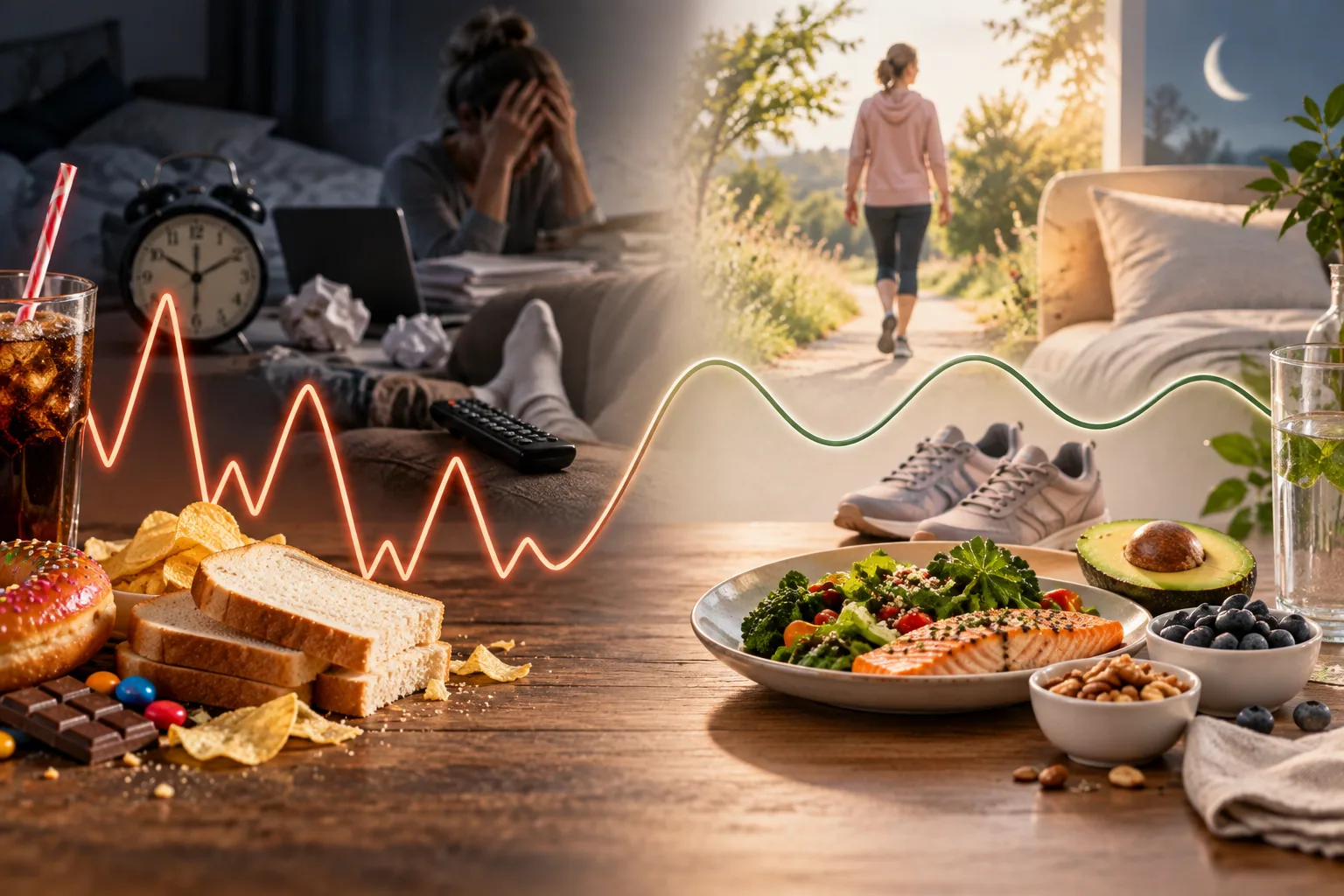
That shape is why some people notice a pattern in the hour or two after eating:
- Sleepiness that arrives on a schedule
- Hunger returning long before the next meal should be due
- Cravings, usually for something sweet or starchy
- Concentration that thins out and takes effort to hold
Two things are worth being careful about here. Feeling any of this does not prove you have insulin resistance, and plenty of people with steady glucose still get sleepy after a large lunch. And glucose is not the only thing changing after a meal. But if the pattern is consistent, and it tracks with what was on the plate, it is a signal worth reading rather than pushing through.
What causes blood sugar spikes?
The usual contributors are unglamorous and short in number:
- Sugary drinks. Soda, juice, sweetened coffee, sports drinks. Liquid sugar arrives fast because there is nothing slowing it down.
- Candy and desserts. Concentrated sugar with very little else in the package.
- Refined bread and baked foods. White bread, rolls, pastries, crackers. Harvard's Nutrition Source notes that refined grains have a higher glycemic index than minimally processed whole grains, and that finely ground grain is digested more rapidly than coarsely ground.
- Large portions of rice, pasta, cereal or potatoes. These are not unusual foods. The portion is usually the variable.
- Carbohydrate eaten on its own. Toast with nothing on it, fruit as a standalone snack, a bowl of cereal. Protein, fat and fiber all slow the arrival.
- Very large meals, regardless of composition.
Individual responses do vary. Two people can eat the same bowl of oats and see different curves, which is one reason a fixed list of forbidden foods is a poor tool compared with paying attention to your own pattern.
Key takeaway: Speed and size are what make a spike, and both are things you control at the plate.
The first change: reduce the carbohydrate load
If you only do one thing, do this one. Less carbohydrate at a meal means less glucose entering the bloodstream after it. That is the most direct lever available, and it does not require precision.
It also does not require going to an extreme. A low carb diet for blood sugar works on a spectrum, and most of the benefit shows up early, in the move from a lot of carbohydrate to a moderate amount. The move from moderate to almost none is a much smaller step with a much larger cost in how liveable the food is. Our guide to how many carbs per day on a low carb diet shows where each range starts and stops.

What that looks like in practice:
- Breakfast. Cereal, toast or a pastry becomes eggs with vegetables. This is the single highest-yield swap for most people, because breakfast is where carbohydrate tends to be eaten alone and in volume.
- Lunch. A sandwich-led plate becomes chicken, salad and avocado, with a smaller carbohydrate serving on the side if you want one.
- Snacks. Sweet snacks become protein-based ones. Boiled eggs, cheese, leftover meat, nuts.
- Drinks. Sweet drinks become water, sparkling water, unsweetened tea or coffee. This one costs nothing and changes more than people expect.
Before you cut carbohydrate, if you take diabetes medication
If you use insulin or a sulfonylurea, this matters before you change anything. NIDDK lists both insulin and medicines that make the pancreas release more insulin, including sulfonylureas, among the causes of low blood glucose, and names not eating enough carbohydrate as one of the triggers. Your medication dose was set against your current way of eating. Cutting carbohydrate sharply without adjusting it can drop blood glucose far enough to cause hypoglycemia.
Other diabetes medications may also need review, and the dose is not yours to guess at. Speak with the clinician who manages your medication before making a major reduction, and ask what they want you to monitor while you change it. If you want the fuller picture first, we cover it in is a keto diet safe for diabetics.
Build meals around protein first
Protein has a smaller immediate effect on blood glucose than carbohydrate does, and it is more satisfying per bite. Those two facts do most of the work.
The practical value is structural rather than nutritional. When you decide on the protein first, the meal stops being built around bread, pasta, rice or cereal by default. The carbohydrate becomes something you add on purpose, in a portion you chose, rather than the thing the plate was organized around.
Reliable options:
- Eggs
- Chicken and turkey
- Beef and pork
- Fish and seafood
- Greek yogurt or cottage cheese, if dairy suits you
- Tofu and tempeh, if you eat them
There is no target you have to hit. A gram count is useful if you like tracking, and completely unnecessary if you do not. What matters is that protein is present at every meal and that it is the part you decided on first.
Choose carbohydrates more carefully instead of treating all carbs the same
Three things change how a carbohydrate food behaves: how much of it you eat, how processed it is, and what you eat it with.
Quantity is the largest of the three and the one people skip, because it is less interesting than arguing about which foods are allowed. Processing matters because milling and grinding do part of the digestive work in advance. And what the carbohydrate is eaten alongside matters because protein, fat and fiber all slow the arrival.
The useful comparisons are within a food, not between good and bad:
- Juice against whole fruit. The juice has had the fiber removed and the volume concentrated. The fruit has neither.
- White bread against a smaller serving of something minimally processed. Same food category, different speed and different amount.
- Sweetened cereal against eggs with a handful of berries. The berries are still carbohydrate. They are just no longer the whole meal.
- A large bowl of pasta against a protein-centered plate with a small side of pasta. Nothing was forbidden. The proportions moved.
None of this makes any food virtuous or shameful. That framing tends to backfire, and it is not how glucose works anyway.
Key takeaway: Amount, processing and company. Adjust those three and you have adjusted almost everything that is adjustable.
Foods that don't spike blood sugar as quickly
Almost any food can affect glucose in some way, directly or indirectly, and no food is inert, so treat the heading loosely. What follows are foods with little or no carbohydrate, which is why they tend to produce a smaller and slower rise.
- Eggs
- Meat and poultry
- Fish and seafood
- Non-starchy vegetables: leafy greens, broccoli, cauliflower, zucchini, peppers, green beans, cabbage
- Avocado
- Olives and olive oil
- Cheese and unsweetened dairy, if they suit you
- Nuts and seeds
- Lower-sugar fruit in moderate portions: berries, mainly
Individual glucose responses differ, and they differ more than the lists suggest. Some people handle a modest portion of rice without much of a rise and find that oats do something quite different. If you have a way of measuring, your own readings are better evidence than any list, including this one. If you do not, the pattern in how you feel afterward is still information.
For a wider set of staples worth keeping in the kitchen, the best keto-friendly foods list covers the categories in order, and healthy fats for a low-carb diet sorts out the fat side of the plate.
For everyday meal building rather than a list, our guide to foods that don't spike blood sugar works through breakfast, lunch, dinner, and snacks, and what to check on a label.
How to balance blood sugar across the day
One formula covers every meal:
Protein, plus non-starchy vegetables, plus a fat you actually enjoy, plus carbohydrate according to your tolerance.
That last clause is doing real work. Tolerance is individual, and it is something you learn by watching rather than something you look up.
Breakfast. Eggs, spinach, avocado. Or leftover meat and whatever vegetable is open.
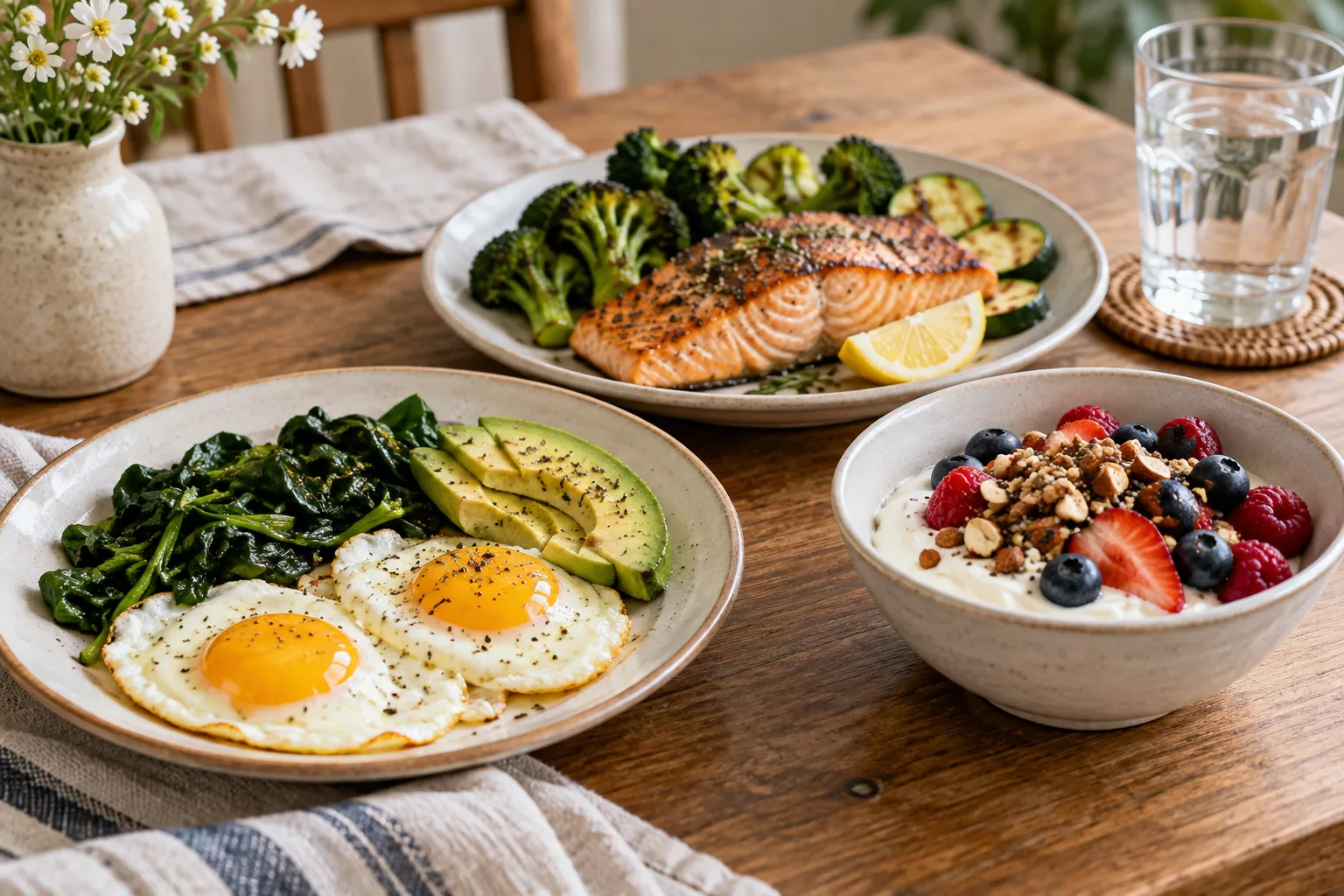
Lunch. Chicken salad with olive oil dressing. Tuna and greens. Anything where the protein is the largest item on the plate.
Dinner. Beef or salmon with vegetables, and a smaller portion of carbohydrate on the side if you want it there.
A snack, if you genuinely need one. Boiled eggs, cheese, plain Greek yogurt, nuts, leftover protein. If snacks are constant rather than occasional, the meals before them were probably too small.
If planning is the part that keeps falling apart, low-carb meal planning is a simpler system than most, and the 7-day low-carb meal plan gives you a week you can copy outright rather than design.
What may change first
The earliest changes are usually things you notice rather than things a lab measures. That is not a lesser result. It is just a different kind of evidence, and it arrives on a much shorter timeline.
What people commonly report in the first week or two:
- Less sleepiness after meals
- Fewer afternoon crashes, or a milder version of the same one
- Hunger that becomes more predictable, arriving when it should
- Less pull toward sweets
- Longer comfortable gaps between meals
- Less grazing, without having to police it
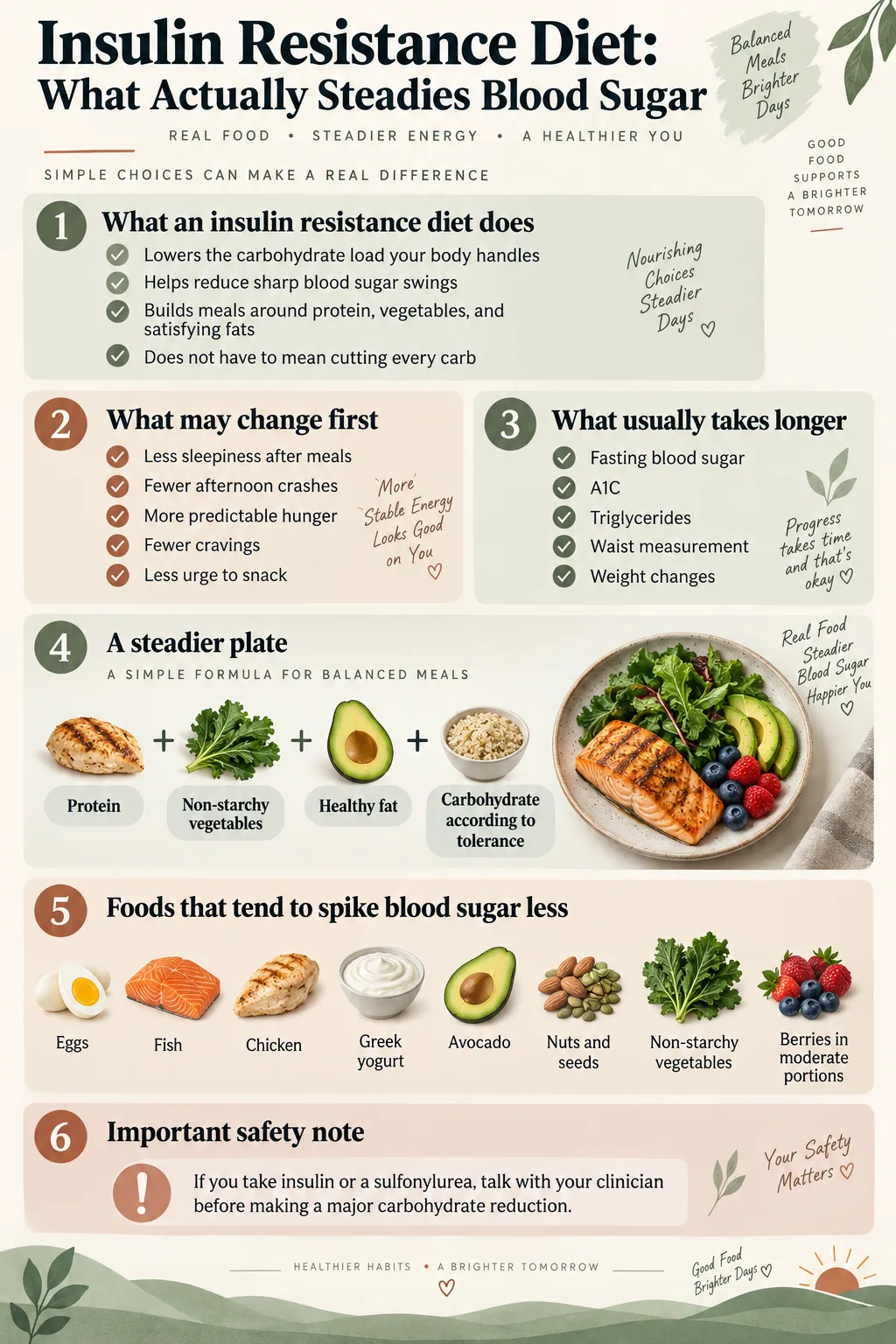
These are real and they are worth having. They are also not proof that insulin resistance has reversed. What they mostly show is that you are handling smaller glucose loads, which is exactly what you set out to do. Whether the underlying sensitivity has shifted is a separate question that this evidence cannot answer.
Cravings deserve a note of their own, because they are usually the first thing to quiet down and the first thing people misread as willpower finally arriving. It is generally not willpower, it is a smaller swing to react to. We go into it further in how to stop sugar cravings, and in stop carb cravings for women over 30 if hormonal shifts are part of your picture.
What usually takes longer
The slower half is measured rather than felt, and most of it needs a blood test or a tape measure.
- Fasting glucose. Moves in a pattern over weeks, not from one good dinner.
- A1C. The A1C test reports average blood glucose over the past three months, which means a month of better eating is only partly reflected in it. It is designed to be slow.
- Triglycerides. Often responsive to carbohydrate reduction, but on a scale of weeks and confirmed by a blood draw rather than a feeling.
- Waist measurement. Slow, and not linear.
- Weight. Slower and less linear still, and a poor day-to-day gauge of anything.
- Insulin sensitivity itself. The hardest to observe directly and the least suited to impatience.
Feeling better after meals can happen well before the slower markers catch up, and the gap between the two is where most people conclude it is not working and stop. It usually is working. The fast evidence and the slow evidence are simply on different schedules, and only one of them is visible from your kitchen.
Key takeaway: Judge the first month by how your afternoons go. Judge the numbers on the schedule the numbers actually run on.
Why fasting blood sugar can be frustrating
This is the one that derails people. Meals are better, afternoons are steadier, and the morning reading has not moved. Sometimes it has gone up.
Morning glucose is not a scorecard for yesterday's dinner. The American Diabetes Association explains that in the early hours of the morning, hormones including cortisol and growth hormone signal the liver to increase glucose production, which is what helps you wake up. That release happens whether or not you ate well.
Liver glucose output is a large part of the morning picture, and it responds to sleep, stress, illness, medication and overall metabolic health, not only to what was on the plate. A short night, a stressful week or a cold can all show up in a morning reading.
Which is why one morning number should not be treated as a verdict on your diet. A run of readings over a couple of weeks tells you something. A single Tuesday tells you almost nothing, and reacting to it usually makes the food harder without making anything better.
How to stabilize blood sugar without making food complicated
Everything above compresses into eight rules. None of them require an app.
- Start the meal with protein. Decide it first, eat it first.
- Cut the refined carbohydrate before anything else. Bread, pastries, crackers, sweetened cereal. Best return, least effort.
- Stop drinking sugar. No exceptions worth defending, and no adjustment period.
- Try not to eat carbohydrate by itself. If fruit is the snack, put some protein or fat next to it.
- Make meals substantial enough to end. Constant grazing is usually a symptom of meals that were too small.
- Keep a few reliable meals on repeat. Deciding what to eat is the step that collapses first when the week gets busy, so remove it where you can.
- Adjust carbohydrate gradually. Especially if you take medication that lowers blood glucose.
- Watch for patterns, not perfect numbers. A single reading tells you very little; a couple of weeks of them tells you something you can act on.
Blood sugar management is more than food
Food is the largest lever most people have, which is why this article is mostly about it. It is not the only one. Our guide to what causes blood sugar spikes covers the other common triggers.

- Walking after meals. NIDDK notes plainly that physical activity often lowers the level of glucose in your blood. Ten or fifteen minutes after eating is a small ask with a real effect.
- Resistance training. Muscle is where a large share of glucose gets used. More of it, used regularly, gives glucose somewhere to go.
- Sleep. Short and broken sleep makes the next day's appetite and glucose harder to manage, and it is often the reason a good week suddenly goes sideways.
- Stress. Stress hormones raise glucose directly. This is not a mindset lecture, it is a mechanism.
- Consistent meal timing. Not a rigid schedule. Just enough regularity that you are not eating at 4pm because lunch never happened.
- Medication, when it is prescribed. Food does not replace it, and adjusting it is a clinical decision.
Where a lower-carb pattern fits, and where another one might suit you better
Lower carbohydrate is not the only way of eating that moves these markers, and it is worth saying so plainly rather than pretending otherwise.
A Mediterranean pattern carries more carbohydrate than a low-carb one, from different sources: vegetables, legumes, fruit, whole grains, with olive oil and fish doing much of the work. Harvard's Nutrition Source notes that in the PREDIMED trial, risk of type 2 diabetes was reduced on a Mediterranean pattern. Some people find it easier to stay on, because very little is off the table.
The two have more in common than the arguments about them suggest. Both cut refined carbohydrate and added sugar, both push protein and whole foods up the plate, and both reduce the number of large, fast glucose loads in a day. That shared part is probably doing most of the work in either one.
So the question is not which pattern is better in the abstract. It is which one you can actually run for a year.
- If post-meal crashes and sweet cravings are your main complaint, a lower-carb pattern tends to act on those particular symptoms faster, because it cuts the load directly and you feel the difference within days.
- If bread, fruit and legumes are foods you have no intention of giving up, a Mediterranean pattern with attention to portion and pairing will usually beat a stricter low-carb one you abandon in six weeks.
- If you have tried strict low-carb before and rebounded, that history matters more than any comparison chart. Repeating it harder is rarely the answer.
You can also sit between them, and most people who stay consistent eventually do. We put the two side by side in low-carb Mediterranean diet vs keto if you want the fuller comparison.
Key takeaway: The pattern that fits your food history and your week will outperform the one that looks best on paper.
When lower carb is not enough
It has to be said plainly, because a lot of writing on this topic quietly implies otherwise.
Glucose regulation is shaped by things food does not touch: genetics, how well the pancreas is producing insulin, medications you take for other reasons, sleep, stress hormones, illness, how much glucose the liver puts out, and how far the insulin resistance has progressed.
Some people reduce carbohydrate, watch their numbers improve considerably, and need very little else. Other people do everything in this article properly and still need medication or additional medical treatment. That second outcome is not a failure of effort, and it is not evidence that the food changes were pointless. It means the condition has more than one input, and you addressed one of them well.
If your numbers are not moving after a genuine, consistent stretch, that is a conversation to have with your doctor rather than a reason to cut carbohydrate further.
A simple insulin resistance diet starting point
You do not need a plan. You need the next meal.
- Choose your protein. Whatever is in the fridge.
- Add non-starchy vegetables. Frozen ones count, and they are usually what is actually in the freezer.
- Add a fat that makes it worth eating. Butter, olive oil, avocado, cheese.
- Decide whether you want a carbohydrate side. Some meals want one and some do not.
- If you include it, keep it smaller than the protein and vegetables. There is no more precise portion rule than that.
- Skip the sugary drink.
No macro calculation, no tracking app, no shopping trip required before you can begin. Do that at the next meal, then again at the one after it, and you are already running the thing this article describes.
Common questions
Can you eat carbohydrates with insulin resistance?
Yes. The useful questions are how much, what kind, and what it is eaten with. A smaller portion of minimally processed carbohydrate, eaten alongside protein and fat, behaves very differently from a large portion of refined carbohydrate eaten on its own. Tolerance also varies between people, so your own pattern matters more than a general rule.
Is a low-carb diet good for insulin resistance?
Reducing carbohydrate reduces the glucose load your body handles at each meal, and many people find that helps with post-meal energy, hunger and cravings. Research suggests it can also support improvements in some metabolic markers over time. That is not the same as treating or reversing insulin resistance, and results vary enough that it is worth tracking your own rather than assuming.
What foods cause the biggest blood sugar spikes?
Refined and rapidly absorbed carbohydrate, particularly in large portions. Sugary drinks are usually the biggest single contributor because liquid sugar arrives with nothing to slow it. Candy, desserts, refined bread and baked goods, and large servings of rice, pasta or potatoes follow.
How long does it take to stabilize blood sugar?
Two different answers, which is the source of most of the confusion. The post-meal response changes immediately, at the very next meal you build differently. The slower markers, including A1C, reflect weeks to months rather than days, since A1C reports an average across roughly three months.
Do I need to check my blood sugar after every meal?
Not necessarily. Whether and how often to test depends on your diagnosis, your medications and what your clinician recommends. If you do have a meter, testing selectively around a few specific meals usually teaches you more than testing constantly.
Will cutting carbs fix insulin resistance on its own?
For some people it does a great deal. For others it is one input among several, and medication, sleep, activity and medical treatment all still matter. If you have been consistent for a stretch and the numbers are not moving, that is a reason to talk to your doctor, not a reason to cut further.
Find the numbers that fit you, before the next shop.
Reducing the carbohydrate load is easier when you know roughly where you are starting from. Work out your own targets, then keep the carb counts in your pocket while you eat.
Try the free keto calculator →Get the free carb count cheat sheet
This article is general information, not medical advice. If you take medication for diabetes or have another diagnosed condition, talk to the clinician who manages your care before making a significant change to how you eat.
Sources
- Insulin Resistance & Prediabetes. National Institute of Diabetes and Digestive and Kidney Diseases
- Low Blood Glucose (Hypoglycemia). National Institute of Diabetes and Digestive and Kidney Diseases
- The A1C Test & Diabetes. National Institute of Diabetes and Digestive and Kidney Diseases
- Healthy Living with Diabetes. National Institute of Diabetes and Digestive and Kidney Diseases
- Carbohydrates and Blood Sugar. Harvard T.H. Chan School of Public Health, The Nutrition Source
- High Morning Blood Glucose. American Diabetes Association
- Diet Review: Mediterranean Diet. Harvard T.H. Chan School of Public Health, The Nutrition Source