A breakfast you assemble, not cook
A savory cottage cheese bowl is about the fastest real meal there is. Spoon it out, chop two vegetables, add an egg and some seeds. Ten minutes, and nothing to wash but a knife.
Most of the protein comes from the cottage cheese itself, with the egg and pumpkin seeds adding more. The vegetables bring crunch and only a few grams of carbohydrate. There's no bread, granola or fruit underneath, which is where a sweet cottage cheese bowl usually picks up most of its carbs.
Many people find a first meal built around protein holds them longer than one built around starch or sugar. It's food, though. It won't treat anything, and how your own blood sugar responds will vary. The fuller picture is in what causes blood sugar spikes.
Why savory instead of sweet
The cottage cheese bowls that fill social media are mostly sweet: honey, berries, granola, sometimes jam. They can be good, and they can also carry more carbohydrate than the toast they replaced.
Going savory keeps the same high-protein base and moves the flavor to salt, acid, fat and crunch. Think of it as a chopped salad with a creamy base. If you've only ever eaten cottage cheese sweet, the dill and black pepper are what make it work.
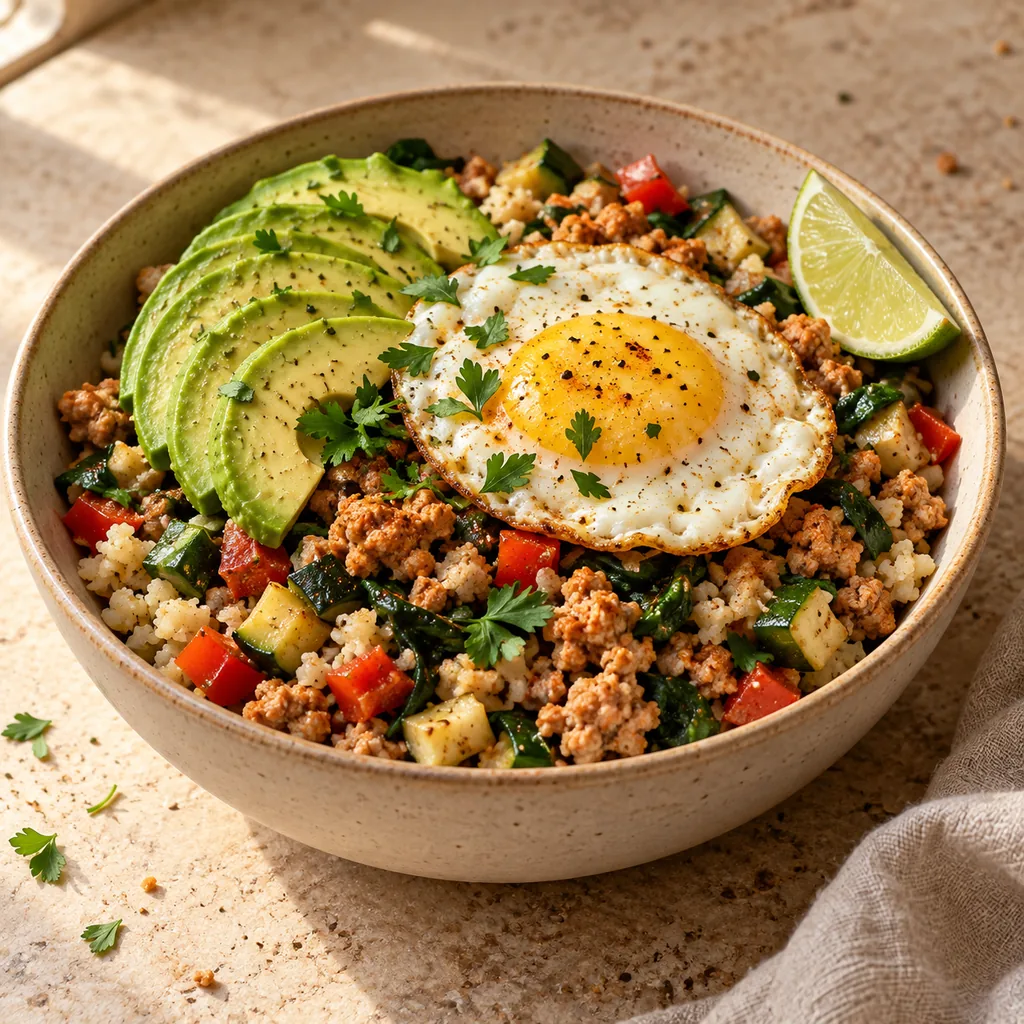
For a hot savory start, there's the turkey breakfast bowl with cauliflower rice. More ideas in the same pattern are in five low-carb breakfasts for steadier blood sugar.
Read the cottage cheese label
Cottage cheese varies more than you'd expect, so two minutes at the dairy case is worth it.
- Carbohydrate. Plain cottage cheese has a little natural milk sugar. Flavored or "fruit on the bottom" tubs have added sugar, and the card's numbers won't apply.
- Sodium. Cottage cheese is a salty food. If you're watching sodium, low-sodium versions exist. That's also why the recipe says to taste before you salt.
- Fat level. The card uses 2%. Full-fat (4%) and nonfat both work. By USDA's figures, 4% has a little less carbohydrate than 2% and nonfat has more, because taking the fat out leaves a higher share of milk sugar.
It's also a good snack on its own. It turns up in our list of high-protein low-carb snacks.
Savory Cottage Cheese Bowl
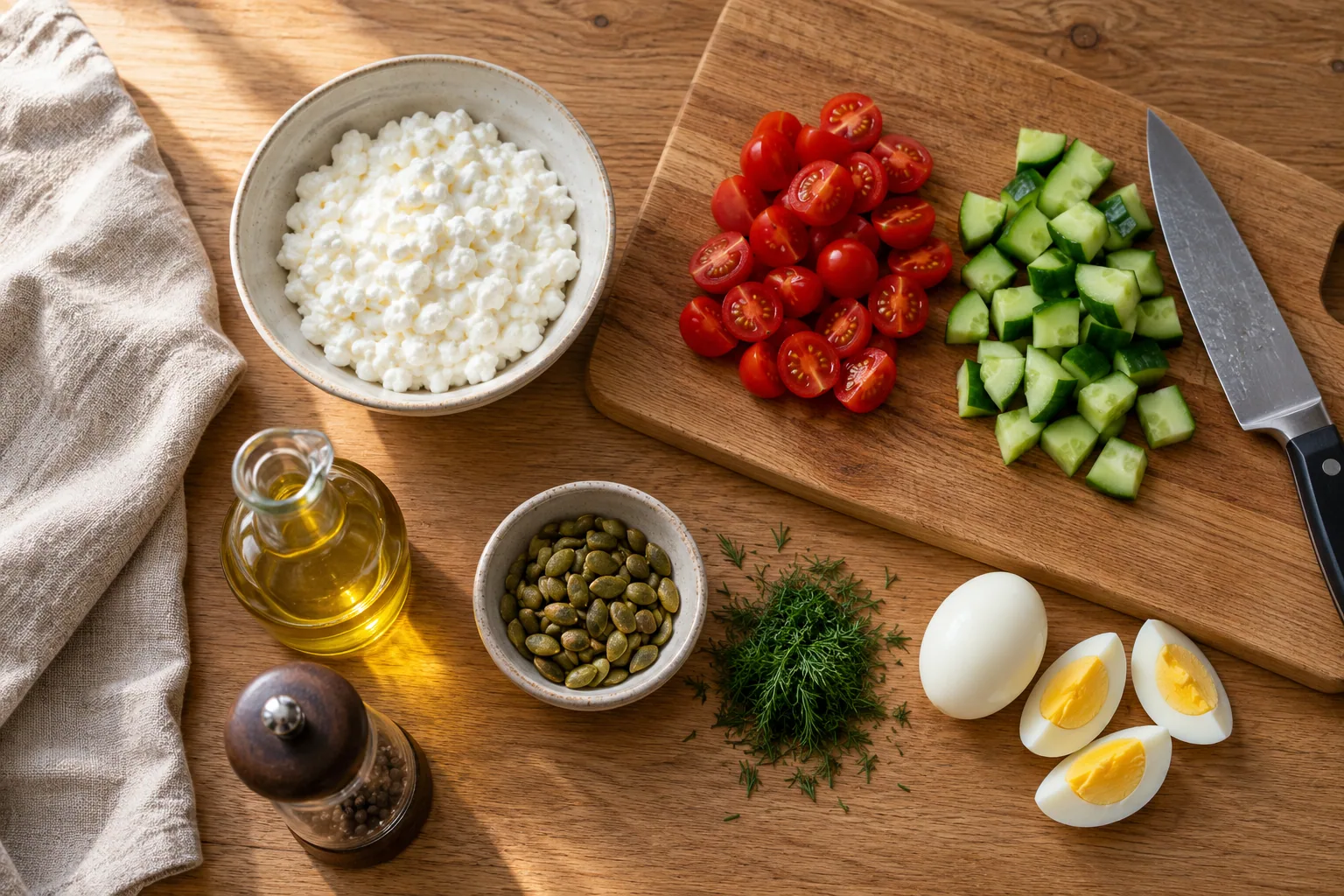
Cottage cheese topped with cherry tomatoes, cucumber, hard-boiled egg, pumpkin seeds, dill and olive oil. No cooking.
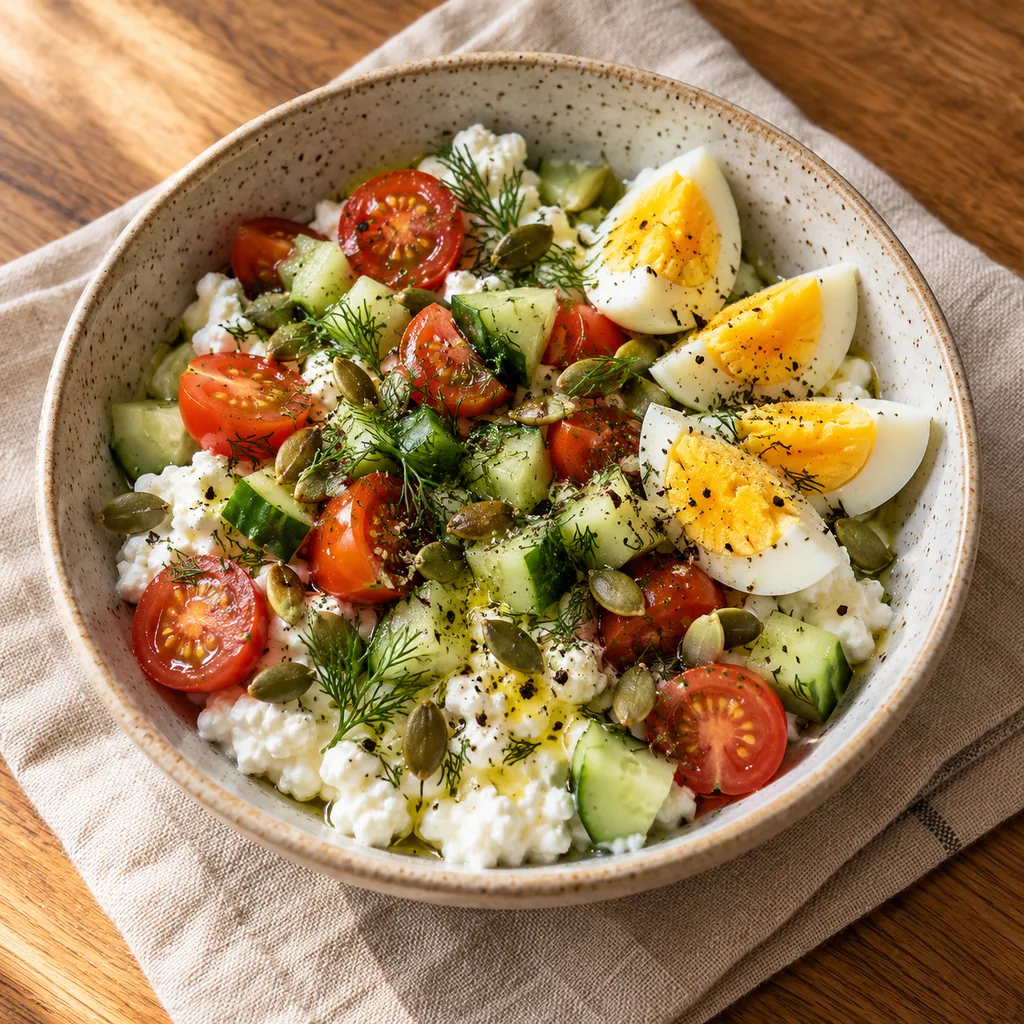
Ingredients
- 450g 2% lowfat cottage cheese, small or large curd (2 cups)
- 2large hard-boiled eggs, peeled and quartered
- 150g cherry tomatoes, about 9, halved
- 150g cucumber, about half a medium, with peel, diced
- 30g roasted pumpkin seeds, unsalted (¼ cup)
- 1tbsp extra-virgin olive oil
- 1tbsp chopped fresh dill or chives
- ¼tsp ground black pepper
- Pinch of red pepper flakes, optional, not included in the nutrition
- Salt to taste, taste first, as the cottage cheese is already salty. Not included in the nutrition
The times assume the eggs are already boiled. If they aren't, boiling them adds about 12 minutes.
Instructions
- 1
Spoon the cottage cheese into two shallow bowls, about 1 cup each.
- 2
Halve the cherry tomatoes.
- 3
Dice the cucumber into small cubes.
- 4
Quarter the hard-boiled eggs.
- 5
Arrange the tomatoes, cucumber and egg over the cottage cheese.
- 6
Drizzle each bowl with half the olive oil.
- 7
Scatter the pumpkin seeds, herbs and black pepper over the top.
- 8
Taste, then add a pinch of red pepper flakes, and salt only if it needs it. Eat right away.
Nutrition per serving
One serving is one bowl, half the recipe, with one egg. Net carbs here means total carbohydrate (19.3g) minus fiber (2.3g). There are no sugar alcohols in this recipe, so nothing else is subtracted. Also per serving: 13g sugar, nearly all of it natural milk sugar from the cottage cheese, and 766mg sodium, with no salt added. Doubling or tripling the recipe changes the batch, not the serving, so these figures stay the same.
Calculated per ingredient from USDA FoodData Central, using 2% cottage cheese, hard-boiled eggs and unsalted roasted pumpkin seeds. Salt and red pepper flakes are left out.
Nutrition is calculated from ingredient data and will vary with brands, vegetable sizes and how much ends up in each bowl. Treat it as close, not exact.
Storage and safety
Assemble the bowl just before you eat it. Keep the cottage cheese and boiled eggs in the fridge until then.
If you take insulin or another medicine that lowers blood sugar, talk to the doctor who manages it before cutting carbohydrate sharply.
Where the carbs come from
Most of the carbohydrate in this bowl is the cottage cheese's own milk sugar. The toppings add surprisingly little.
- cottage cheese: about 10.8g net carbs a bowl
- cucumber: about 2.4g
- cherry tomatoes: about 2g
- pumpkin seeds: about 1.2g
- egg, dill and pepper together: about 0.7g
So the type of cottage cheese moves the number more than any topping does. That's what the swaps below are about.
Total carbs or net carbs?
Both numbers are on the card. Total carbohydrate on a US label includes fiber. Net carbs is total carbohydrate minus fiber, which is how most low-carb approaches count: 19.3g minus 2.3g gives 17g a bowl here.
Net carbs is a practical convention, not a regulated label term, and it doesn't predict exactly how your own blood sugar will respond. Pick one method and count it the same way every day. If a clinician has given you a carb-counting method for diabetes, use theirs.
If you take medication that lowers blood sugar
Cutting carbohydrate substantially changes how much glucose-lowering medication your body needs. The NIH lists insulin and medicines such as sulfonylureas among the causes of low blood glucose, and names not eating enough carbohydrate as one of the triggers.
If you use either and this bowl would replace a higher-carb breakfast, talk to the doctor who manages your medication before you make the change, and don't adjust doses yourself. Shakiness, sweating, confusion or unusual dizziness are worth telling them about promptly.
Swaps that work
4% cottage cheese. About 14g net carbs a bowl instead of 17g, and about 40 more calories.
Nonfat cottage cheese. About 21g net carbs a bowl and 20 fewer calories, with a little more sodium. Nonfat tubs vary a lot, so check the label.
Plain Greek yogurt instead of cottage cheese. Smoother and tangier. About 15g net carbs a bowl, roughly the same protein, and far less sodium: about 150mg a bowl instead of about 770mg.
No egg. About 16.5g net carbs and 29g protein a bowl.
Sunflower seeds or chopped almonds instead of pumpkin seeds. The net carbs barely move, by under 1g a bowl, and you lose about 1.5g of protein.
Everything bagel seasoning instead of the dill and pepper. Good, but it adds a fair amount of salt. Not included in the nutrition.
Smoked salmon or leftover steak on top. Makes a bigger bowl. Not included in the nutrition.
Other vegetables. Radishes, bell pepper or a handful of arugula. The carbs will shift a little.
There's no real dairy-free version. Cottage cheese is the dish.
Make it ahead
Boil a few eggs ahead and keep them in the fridge. Chop the cucumber and tomatoes the night before and keep them in a covered container. In the morning the bowl takes about two minutes.
Add the pumpkin seeds last so they stay crunchy. For a week of breakfasts that mostly decide themselves, this fits into low-carb meal planning.
Common questions
Is cottage cheese low carb?
Plain cottage cheese is fairly low in carbohydrate, and the carbs it does have are natural milk sugar. By USDA's figures, a cup of 2% cottage cheese has about 11g of carbohydrate and about 23g of protein. Flavored versions are a different food, so check the label.
Can I eat this for lunch?
Yes. Nothing about it is specific to the morning. With smoked salmon or steak on top it's a full lunch.
Is this a keto breakfast?
It's a low-carb bowl, and it doesn't need a strict ketogenic plan to make sense. Whether it fits a tighter target is about your whole day, not this one meal.
Real food. Fewer complications.
I share practical low-carb meals and clear guidance for people who want more stability without turning food into another full-time job.
Read my story →